Use case map
I start with the surface, not the style. A coffee table centerpiece, a shelf accent, a mantel topper, and an entryway riser all need different amounts of visual room and physical clearance.
For a busy surface, I favor pieces that stay put and do one job well. For a quieter shelf or mantel, I can give more weight to shape, layering, and visual balance.
Decision factors
Footprint and clearance come first, because a decorative accent can look right and still crowd a tray, lamp, stack of books, or walkway edge. I also pay attention to how much open space the piece needs around it, not just its listed size.
Maintenance matters more than many shoppers expect. Smooth finishes, wipeable surfaces, and pieces that do not trap dust are easier to keep in rotation, especially on tables that get used daily.
Material and construction signals help separate a simple accent from one that will age well in a busy room. Wood, resin, and bead garlands each bring different cleanup and handling needs, so I weigh that against how visible the piece will be.
Price spread changes the tradeoff rather than the basic job. A lower-cost accent can cover the same surface role, while a slightly higher spend may buy a more stable base, a cleaner finish, or a shape that looks better from more angles.
Best for each situation
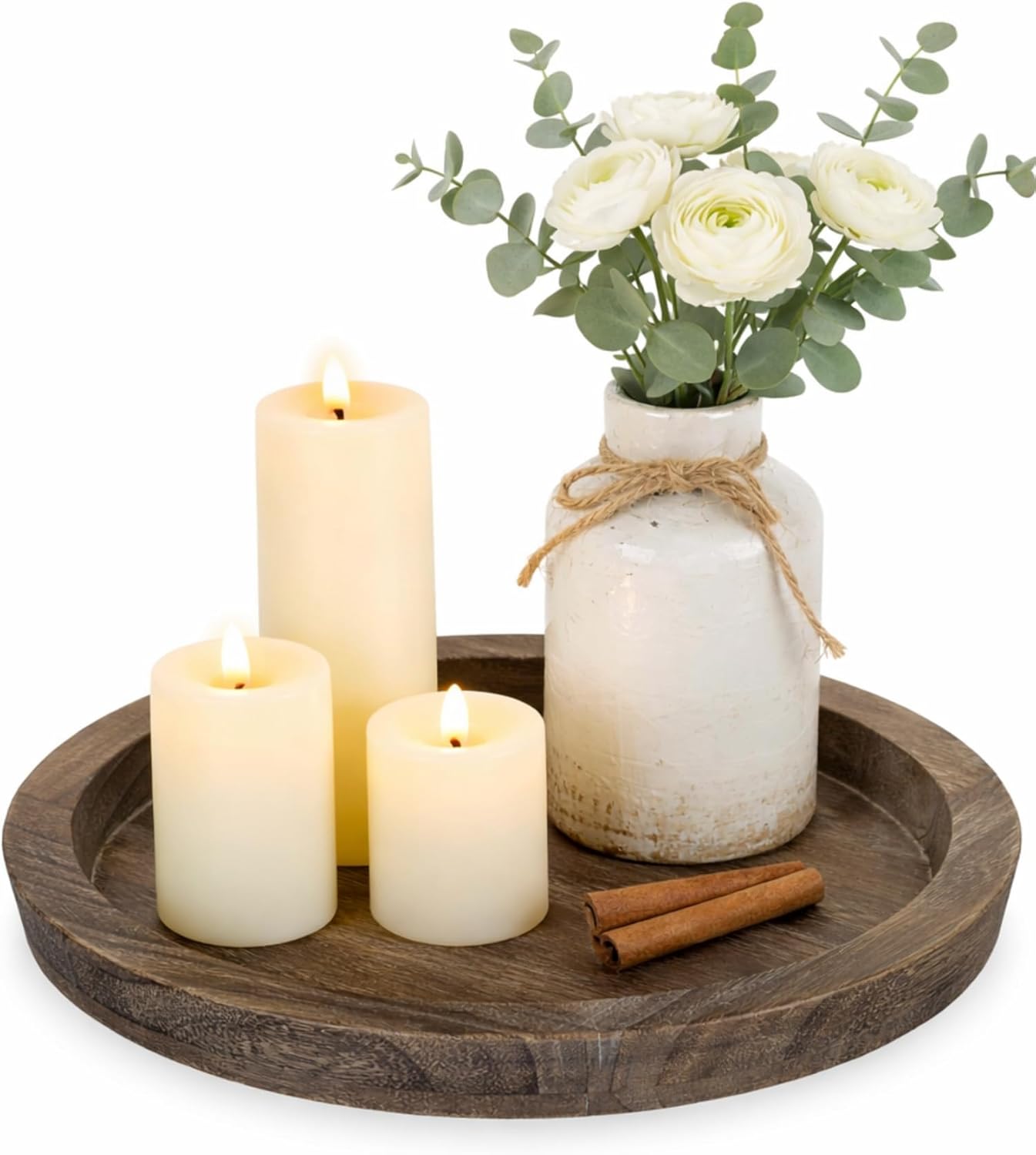
For a coffee table centerpiece, the Hanobe Candle Plate Holder Tray is the most straightforward choice when I want a low, contained base for candles or small decor. The round shape keeps the footprint simple, which helps when the table also has remotes, mugs, or books in play.
For a budget mantel or shelf garland, the Farmhouse Beads Long Length Solid Wood Bead Boho Tassel Garland gives the most coverage per dollar. It works best when the goal is to soften a line or fill visual space without adding a bulky object that needs its own landing zone.
For a more sculptural tabletop accent, the Yalikop 3 Link Wood Knot Decor offers a stronger focal point. I would choose it when the surface can handle a more noticeable object and the room needs one piece that reads more decorative than functional.
For an entryway console or bathroom-adjacent surface, the zoocatia Small Wood Tray Pedestal Stand is the most useful when the goal is to lift soap, bottles, or a small grouping off the counter. It helps organize a tight spot while keeping the display compact and easy to wipe around.
For a bookshelf vignette, the Small Heart Hands Sculpture works best when I want a small accent with a clear silhouette. It is the easiest of the group to tuck into a narrow shelf opening, but it is also the least flexible if I need a larger anchor piece.
Tradeoffs
The lower-cost bead garland gives length and softness, but it does not solve containment the way a tray or riser does. If the space gets handled a lot, I would move toward a more solid base instead.
The tray and riser styles are easier to organize around, yet they can look more utilitarian if the rest of the room is already full of straight lines and hard surfaces. In that case, a sculptural knot or hand-shaped accent may create a better visual break.
Garlands and small sculptural pieces are better when I want light visual weight, but they depend more on nearby styling to look finished. If I want one item to do the heavy lifting on a cluttered surface, I would spend more on the piece that holds the arrangement together.
Quick answer
For decorative accents, start with the surface they will sit on, the visual weight the room can handle, and how easily the finish can be dusted or moved. This guide is for readers who are choosing decorative accents that fit coffee tables, shelves, mantels, or consoles without crowding the surface. Three-Link Wood Knot Decor is the first pick to compare for coffee tables, shelves, or a tray that needs one low, sculptural object instead of loose clutter. Its current price signal is Under $25. Its review context is 4.5 rating from 1,946+ reviews.
How to choose between these picks
Start by matching the decorative accents to the room, routine, and tradeoff that matters most:
- footprint and clearance.
- task fit.
- room fit.
- maintenance.
- visible tradeoffs.
- material and construction signals.
- price spread.
- Daily usefulness.
- Display scale.
Measure/check before buying
- Separate the decorative accents options by display surface first: coffee table, shelf, mantel, console, or vanity.
- Measure usable surface depth and leave open space around lamps, books, remotes, candles, or table edges.
- Check whether the finish will mostly need dusting, gentle wiping, or extra care around water and wax.
- Decide whether the room needs one sculptural focal point, a contained tray, or a softer linear accent.
- Recheck the current decorative accents price before relying on it as the value pick.
- Use the decorative accents photos for shape and finish, then confirm the listed size or fit details.
- Treat decorative accents ratings as context after the option already matches the room and job.
Common cautions
- Check finish texture, dust-catching grooves, and surface scale before treating a decorative accent as easy care.
- Measure the exact placement area before choosing decorative accents.
- Match decorative accents to the job and room conditions before relying on the main product photo.
- Call out the biggest decorative accents drawback before treating an option as the front-runner.
- The decorative accents can solve a different job than the one the buyer actually has.
- Cleaning, reach, or adjustment can matter more than the first decorative accents photo.
- Listed size details may miss the clearance, hardware, or access space the decorative accents need.
FAQ
What matters most when choosing decorative accents?
I would rank the decision this way: where the piece will sit, how much space it can claim, and how much upkeep I am willing to accept. After that, I look at whether the accent needs to organize, soften, or simply fill a blank surface.
What should I check before buying decorative accents?
Measure the exact placement area, then check clearance around nearby objects, drawer pulls, lamp bases, or edges that could crowd the piece. I also compare finish details so I can tell whether the item will be easy to dust and wipe down.
Related guides
- Cozy Home Under $50 - Connects this decorative accents decision to the broader cozy home under $50 hub.
- Cozy Home - Compare nearby comfort, lighting, textile, and room-finishing decisions.
- Cozy Home Decor: 5 Timeless Accents to Warm Up Your Space - Same topic support article.