Quick answer
Choose food storage by job, not by set size. Glass containers make sense for leftovers and reheating, airtight pantry bins are better for flour and sugar, twist-top freezer containers suit soups or sauces, and produce bins are most useful when drainage and fridge visibility are the real problem.
If the kitchen already feels crowded, start with one zone before buying a large bundle. The small kitchen storage hub is a better starting point when the issue is cabinet, pantry, or fridge layout rather than the containers themselves.
Who this is for
This guide is for a kitchen where food storage is causing daily friction: leftovers are hard to see, dry goods are half-open, freezer portions are awkward, or produce gets lost in the back of the fridge. It is not about building a matching shelf for photos. It is about choosing the container format that solves the repeated problem.
For broader storage planning, the Storage & organisation category groups related cabinet, drawer, and pantry guides. If food containers are competing with cleaning supplies under the sink, the under-sink fit checker can help map that awkward cabinet before adding another bin.
What to check before buying
Measure the storage zone first. A container can be useful on its own and still fail if the lid makes it too tall for a fridge shelf or the set includes shapes that do not stack well in the cabinet.
Check the material against the task. Glass is heavier but better when visibility and reheating matter. Plastic is lighter and easier to carry, but it may wear faster and may not suit heat. Produce bins with inserts can help with drainage, but they also add parts to wash and dry.
Do not assume airtight means effortless. Flour and sugar containers still need enough headroom to scoop, freezer tubs need lids that close cleanly when cold, and fridge bins need enough depth for the food you buy most often.
Product/use-case table
| Pick | Best use | Main tradeoff |
|---|---|---|
| Liuruiyu Glass Food Containers | Meal prep, leftovers, and reheating | Heavier than plastic and breakable if dropped |
| ComSaf Flour & Sugar Storage Set | Pantry staples and baking ingredients | Extra labels and accessories may feel like clutter in a minimal pantry |
| HOMETALL Freezer Containers | Soups, sauces, and small freezer portions | Less durable than thicker containers over long use |
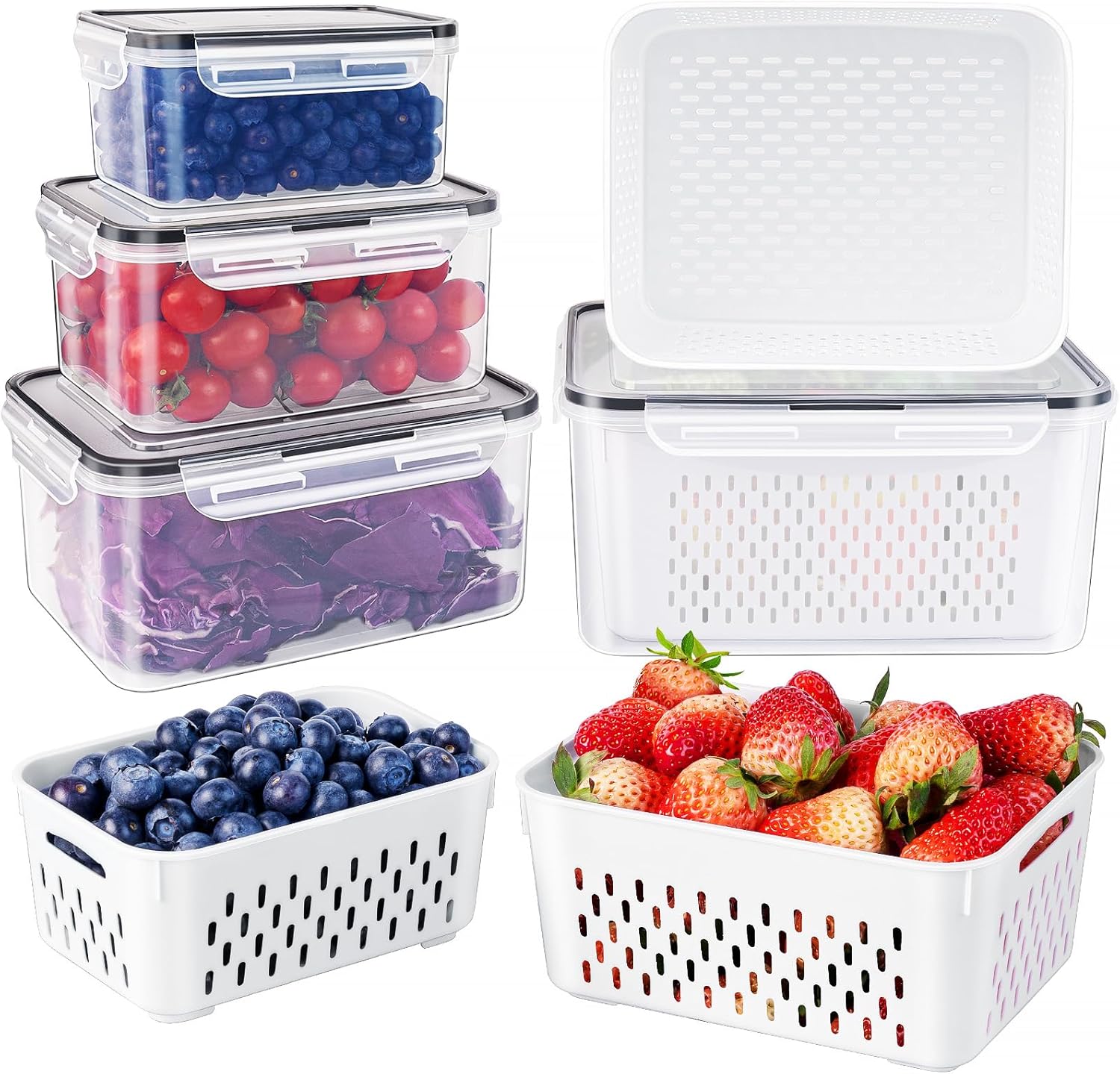
| Freshmage Fruit & Veg Storage | Produce storage with drainage | Colander inserts add a separate cleaning step |
Product-by-product notes
The Liuruiyu glass set is the strongest fit when leftovers and meal prep need to be visible at a glance. The glass format is useful for fridge-to-reheat routines, but the weight and breakability are real tradeoffs. Skip it if containers often travel in a lunch bag or get handled by children.
The ComSaf flour and sugar set is more specific. It makes the most sense for dry goods that need labels, scooping room, and better seals. It is less useful if the pantry is already tight or if extra cups and labels would become one more thing to manage.
The HOMETALL freezer containers solve a different problem: portioning smaller amounts without filling the freezer with bulky glass. They are a budget-friendly fit for soups and sauces, but they should not be treated as oven-safe bakeware or heavy-duty long-term storage.
The Freshmage produce bins are best when washed fruit, berries, vegetables, or meat packages need a clearer fridge zone. The drainage insert is the point of the product, but it also means more pieces to wash, dry, and store.
Common tradeoffs
Matching containers look calm, but buying one large set can create waste if only two sizes fit the real routine. A smaller mix often works better: one glass set for leftovers, one dry-goods solution for pantry staples, and a few freezer-safe pieces sized to actual portions.
The biggest mistake is treating every food storage problem as the same problem. Counter clutter, stale pantry goods, freezer crowding, and produce waste need different formats. Solve the most annoying zone first, then decide whether the next purchase is still necessary.
FAQ
Are glass food containers always better than plastic?
No. Glass is useful for visibility, reheating, and avoiding stains, but it is heavier and breakable. Plastic or lighter freezer containers can be more practical for travel, kids’ lunches, and small portions.
Should I buy a large matching food storage set?
Only if the sizes match the way food is actually stored in the kitchen. Before buying, check shelf height, fridge depth, freezer space, and whether the lids stack neatly.