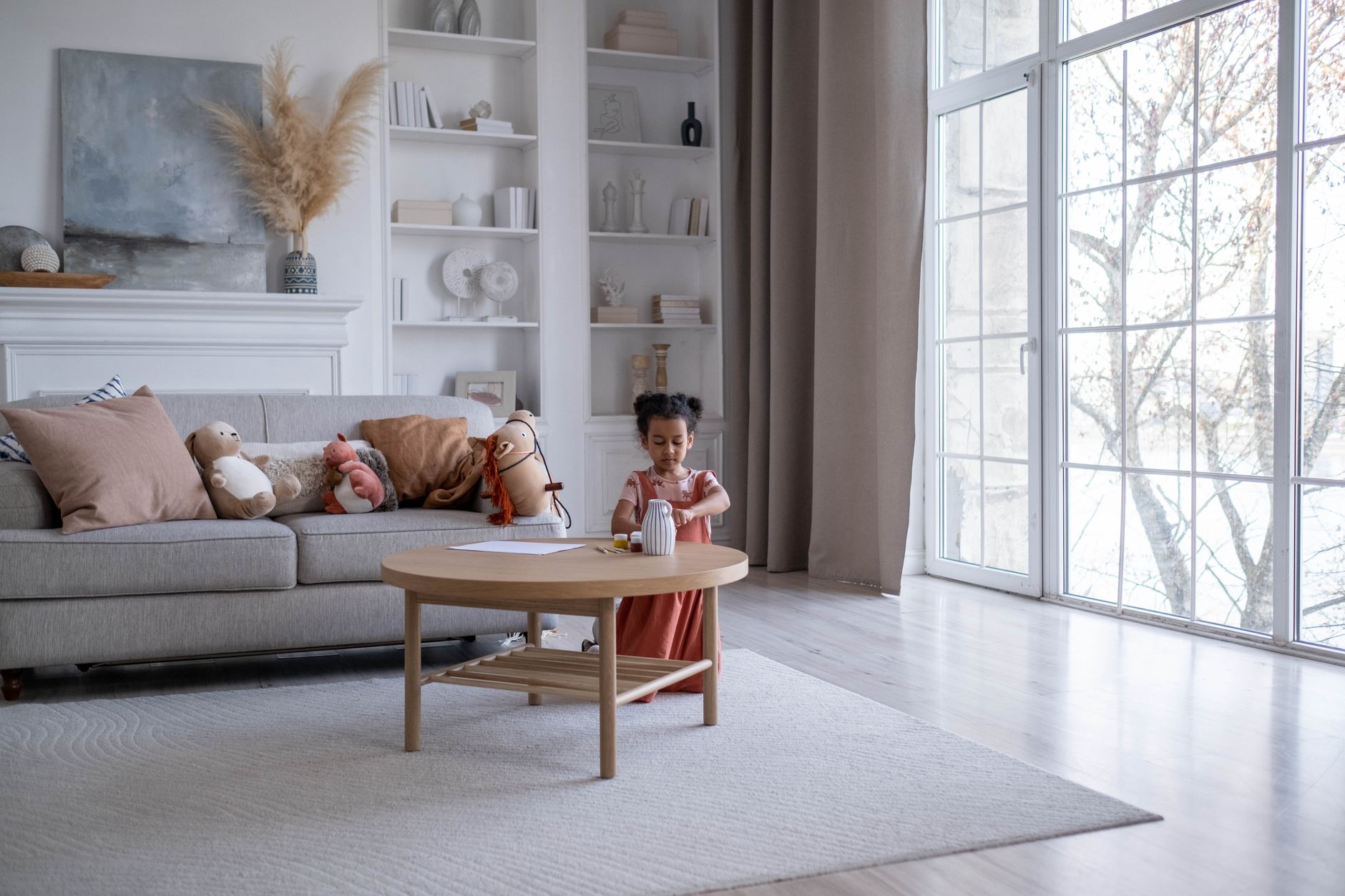
Before you bring in anything new, sit for a minute in the room as it is. Not the room you imagine after a new sofa, a wider coffee table, or a smarter storage piece. The room you actually live in: with backpacks by the door, a blanket folded over the arm of a chair, one remote missing, and the light that always lands in the same awkward corner at 5 p.m. Family living room flow is often easier to feel than to name. It shows up in the small frictions and the easy paths, in how often people cut across the rug, where they pause, and which seat everyone drifts toward without thinking. That is the real place to begin in furniture, especially in a family living room. Not with style first, but with movement, habits, and the quiet choreography of everyday life.
Watch the room like it already knows your family
A family living room rarely functions as one single space. It is usually a landing zone, a reading corner, a screen room, a place to sort mail, a place to sit on the floor, and sometimes a temporary dining room or homework station. That overlap is not a problem to solve immediately.
It is information. Try noticing where the room naturally opens up and where it tightens. Which path do people use when they enter?
Do they walk around the edge of the room or diagonally through the center? Does the room invite sitting, or does it subtly ask people to stand and hover? Sometimes the biggest clue is not what feels empty, but what feels avoided.
If the couch blocks a path, if the coffee table catches a knee every other day, if the ottoman has become a stepping stone instead of a place to rest, those are signals. Flow is not about making the room look spacious on paper. It is about making everyday movement feel unforced in real life.
Notice the places where comfort and traffic compete
Family living rooms ask furniture to do two jobs at once: support comfort and stay out of the way. That balance is where most buying decisions get more complicated than expected. A sofa may look perfect in isolation, but if it interrupts the main route from the hallway to the kitchen, the room will feel tired faster than you expect.
The same is true of a coffee table that is beautiful but sits too far from the seating to hold a mug, or too close to allow little legs, toy bins, or a stretch out on the floor. When the room is busy, people stop using the most awkward pieces the way they were intended. This is why it helps to think less about filling the room and more about preserving ease.
In some homes, that means leaving a generous passage behind the sofa. In others, it means choosing a shape that softens the center of the room rather than hardens it. If your family room is also where you park a stroller, set down groceries, or let children sprawl with puzzles, those practical paths deserve more attention than a perfectly centered layout.
For rooms that need a reset around seating, the guide to best sofas for small living rooms, guests, and everyday lounging can help you think through how seating choices change the way a room moves.
Look at what the room is already asking for
Before adding anything new, take note of what is constantly being borrowed from elsewhere. If lamp cords travel awkwardly across the floor, the room may be asking for better placement, not just brighter bulbs. If toys or throws pile up near one side of the room, perhaps that is where an accessible basket, low shelf, or hidden storage piece would actually live.
If people keep setting drinks on armrests, windowsills, or the floor, the room may be missing a simple landing spot. This is where furniture becomes less about decoration and more about daily relief. A well-placed side table can keep a room from feeling improvised every evening.
A storage piece can keep the center clear without forcing the family to become tidier than they are. Even a modest change in surface height can change how people settle into a room. If your family room also absorbs overflow from the rest of the house, it may help to look at storage in the same way you look at seating: by use, not by category.
In homes where one room carries a lot of family life, a calmer storage setup often matters more than an extra decorative object.
Measure the invisible things, too
It is easy to measure wall length. It is harder, and more useful, to measure comfort. How much space does a child need to turn around without knocking into furniture?
How far does someone need to lean to put a plate down without feeling stranded? Can two people pass each other while one is carrying laundry or a cup of tea? Does the room still work when the ottoman is in use, or when the floor is covered with blocks, books, or a blanket fort?
These are not luxury questions. They are the questions that determine whether the room feels calm or tense by dinner time. A family living room often benefits from generous clearances around the pieces that get the most use.
That might mean leaving more breathing room between the sofa and the table, or choosing furniture that visually lightens the center of the room. It may also mean accepting that the room cannot hold everything at once. A layout that works for movie night, reading, and an afternoon with cousins is usually one that leaves some flexibility on purpose.
For one of the most useful supports in that center zone, the next read on coffee tables for small living rooms, storage, and daily use is a natural companion to this kind of noticing.
Let the room tell you where to spend your attention
Once you have watched the movement, the bottlenecks, and the habits, the buying question becomes clearer. Not “What should we add?” but “What would make this room easier to live in every day?” Sometimes the answer is not a larger piece. Sometimes it is a narrower one.
Sometimes it is choosing a shape that lets sightlines stay open, or a finish that survives sticky hands and repeat use. Sometimes it is resisting the urge to make every corner do more, and instead letting one part of the room stay open for play, stretching, or simply not bumping into anything. There is also room for softness here.
A family living room does not need to feel engineered. It needs to feel hospitable. If a chair is the place where someone always reads before bed, or if the sofa is where the whole family piles together on rainy afternoons, the room is already doing something right.
Good furniture should support that pattern, not erase it. If you are thinking beyond the living room, similar questions come up around best dining tables for small rooms, seating, and everyday meals and best dining chairs for seat comfort, table clearance, and daily meals, where movement, clearance, and daily use matter just as much.
A room that feels easier is usually the right clue
The most useful living rooms are rarely the most finished ones. They are the ones that let people move without thinking too hard, settle without rearranging everything, and live their ordinary hours without constant compromise. So before buying anything new, notice what the room is already doing well, what it keeps fighting against, and what gets in the way by the end of the week.
Those are the details that lead to better choices. If you want to keep going with that same practical eye, the next natural step is the article on coffee tables and what fits where.