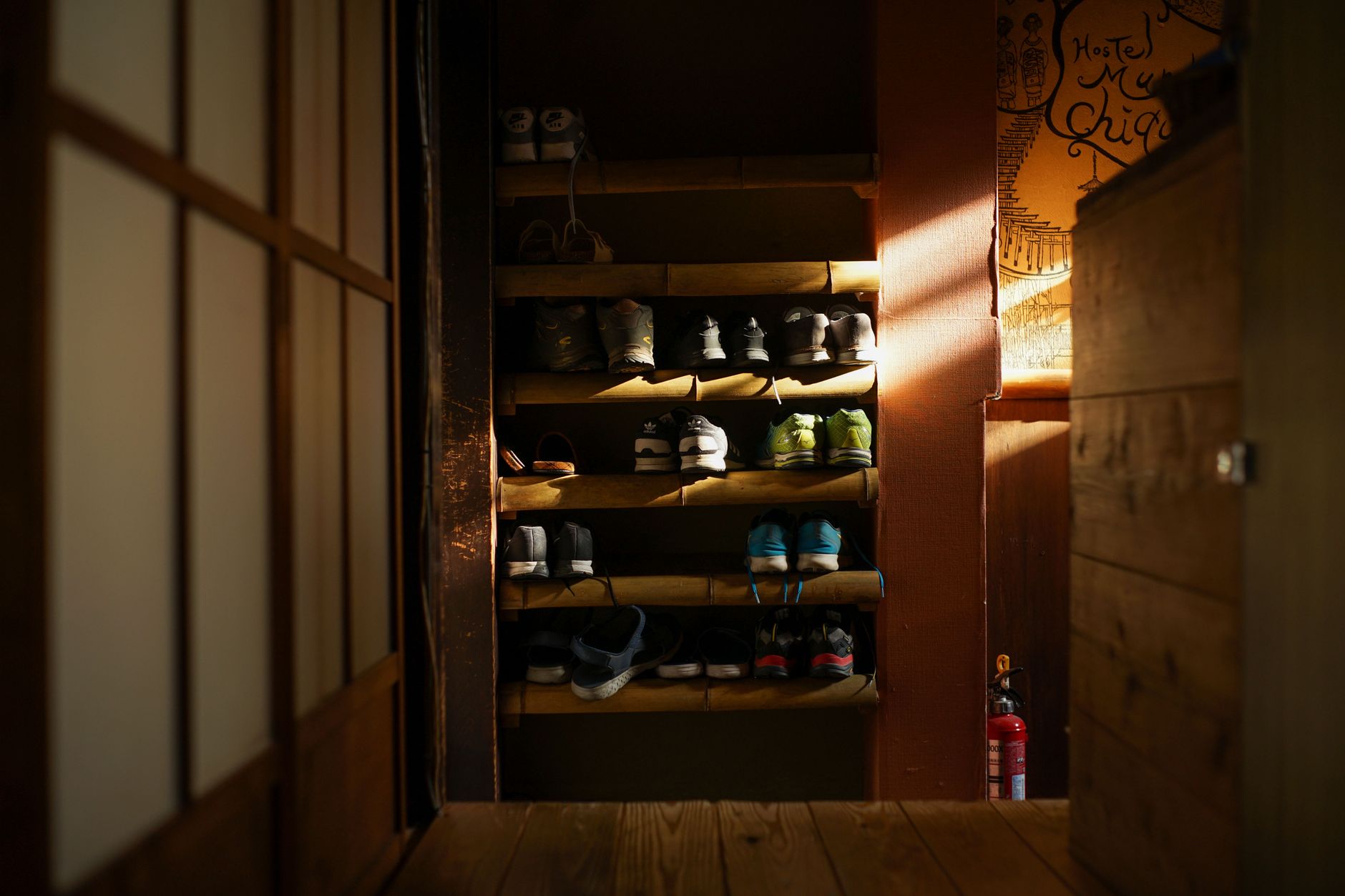
The first thing to notice is not the shoes
Entryway clutter control sounds, on paper, like a storage problem. In real homes, it is usually a decision problem. The trouble at the front door is rarely that one more basket would solve everything.
It is more often that the space is doing too many jobs at once: landing zone, weather buffer, bag drop, mail shelf, pet station, school checkpoint, and the place where everyone briefly forgets their intentions. When space is tight and patience is thinner still, the goal is not to make the entryway perfect. It is to make it easier to live with by removing the few things that cause the most friction.
That is the quiet logic behind good storage & organisation in an entryway: not more systems, but better priorities.
Start with what gets in the way of leaving and coming home
If the door feels annoying, pay attention to the moments that slow you down. Do you stop because there is nowhere for keys? Do you trip over shoes?
Does the mail pile up because there is no clear landing place? These are small problems, but they repeat every day. That repetition is what makes a room feel chaotic.
So, when energy is limited, begin with the items that interfere with movement: - shoes that block the path - bags that migrate to the floor - keys, cards, and transit items that vanish at the last second - coats that live on the nearest chair instead of a real hook - anything wet, muddy, or bulky that spreads mess beyond its own footprint The point is not to banish every object from the entryway. It is to clear the things that create daily irritation. A narrow space can feel much calmer when the floor is easier to see and the most-used items have one obvious home.
Keep only one “yes” spot for each category In tiny entries, the hardest part is often not sorting but deciding.
If a jacket can go on three hooks, the choice becomes friction. If mail can land on the console, the radiator ledge, or the side table, the clutter returns before dinner. A helpful rule is to choose one clear yes spot per category and let the rest of the space stay quiet.
That may look like: - one small bowl or tray for keys and wallet - one hook or rail for daily outerwear - one bin or low shelf for shoes in use - one lidded basket for items that do not belong in the entry but keep appearing there This is not about building a perfect system. It is about reducing decisions. The fewer places something can go, the less time the room spends negotiating with itself.
For homes where every inch has to work hard, the same principle often helps elsewhere too, like in a narrow pantry that still needs to feel navigable or in smart storage solutions for narrow kitchen spaces. The spaces are different, but the feeling is similar: when you can see where things belong, you stop rearranging them every day.
Protect the floor first If you only fix one thing in an entryway, make it the floor.
That sounds practical because it is. The floor is where clutter becomes obstacle. It is also where mud, rain, and grit collect fastest.
A clear floor does more for a small entry than a lot of visual tidying ever will. Even a cramped space feels more breathable when you can step in without dodging a pile. This may mean resisting the urge to store shoes in a casual heap, even if that heap has become familiar.
It may mean choosing one low-profile shoe zone and allowing only the current rotation there. It may mean placing a tray or mat where wet items can dry without spreading across the room. The emotional benefit is real, too.
A clear floor signals that the house has a starting point. You enter, you stop, you know where things go. That matters on rushed mornings and tired evenings.
Don’t organize what is really overflow
Sometimes the entryway is not cluttered because it is poorly organized. It is cluttered because it is absorbing overflow from the rest of the home. That is a different issue.
If unopened mail, pantry snacks, reusable bags, sports gear, tools, or random cups keep landing by the door, the entryway may simply be the nearest available holding zone. In that case, the kindest move is not more entryway storage. It is to move the overflow back to its proper room, even if only partly.
A small home often needs boundaries more than containers. One basket can hide a lot, but it cannot solve the fact that every room is borrowing space from the others. If you notice the same pattern around beverages, lunch items, or daily carry gear, similar logic applies in other parts of the house too.
Sometimes the real fix is in how to keep drinks ready without cluttering your space or in choosing lunch storage that fits small-space routines. The lesson is simple: a home feels calmer when each category has a place that matches how it is actually used.
Make room for the least patient version of you
When time is short, good organization has to work for the version of you who is late, carrying groceries, wrangling a child, or coming home with an armful of errands. That version of you will not admire a complicated arrangement. It needs obviousness.
So, in the entryway, prioritize the fixes that require the least interpretation: - visible hooks rather than hidden systems that invite temporary piles - a basket that is easy to drop things into, not just easy to admire - a shoe solution that works without bending, stacking, or unlatching - a mail spot that is reachable in one motion This is where patience and space meet. If a setup only works on good days, it will not survive real life. The best entryway habits are not the most elegant ones; they are the ones you can keep using when your hands are full.
Leave a little unsolved on purpose
A tidy entryway does not have to be empty. In fact, in a lived-in home, a little allowance for daily life often makes the space more sustainable. The trick is to leave intentional room for the things that truly arrive every day, while keeping the rest from scattering.
That might mean one small open area for a bag in use, or a hook reserved for tomorrow’s coat, or a basket that is large enough to hold the real volume of family life but small enough to discourage dumping. This kind of restraint feels less decorative than dramatic decluttering, but it is often what keeps a home calm over time. Entryway clutter control is really about making peace with the scale of the space.
When square footage is limited, the right question is not “How do I fit everything?” It is “What deserves to stay right here because it saves time, and what only stays because I have not decided otherwise?” The answer tends to be smaller than we expect, and much more livable. If you want to keep that calm going at the threshold and beyond, the next read looks at one more everyday category that benefits from a simpler landing place: drinks.