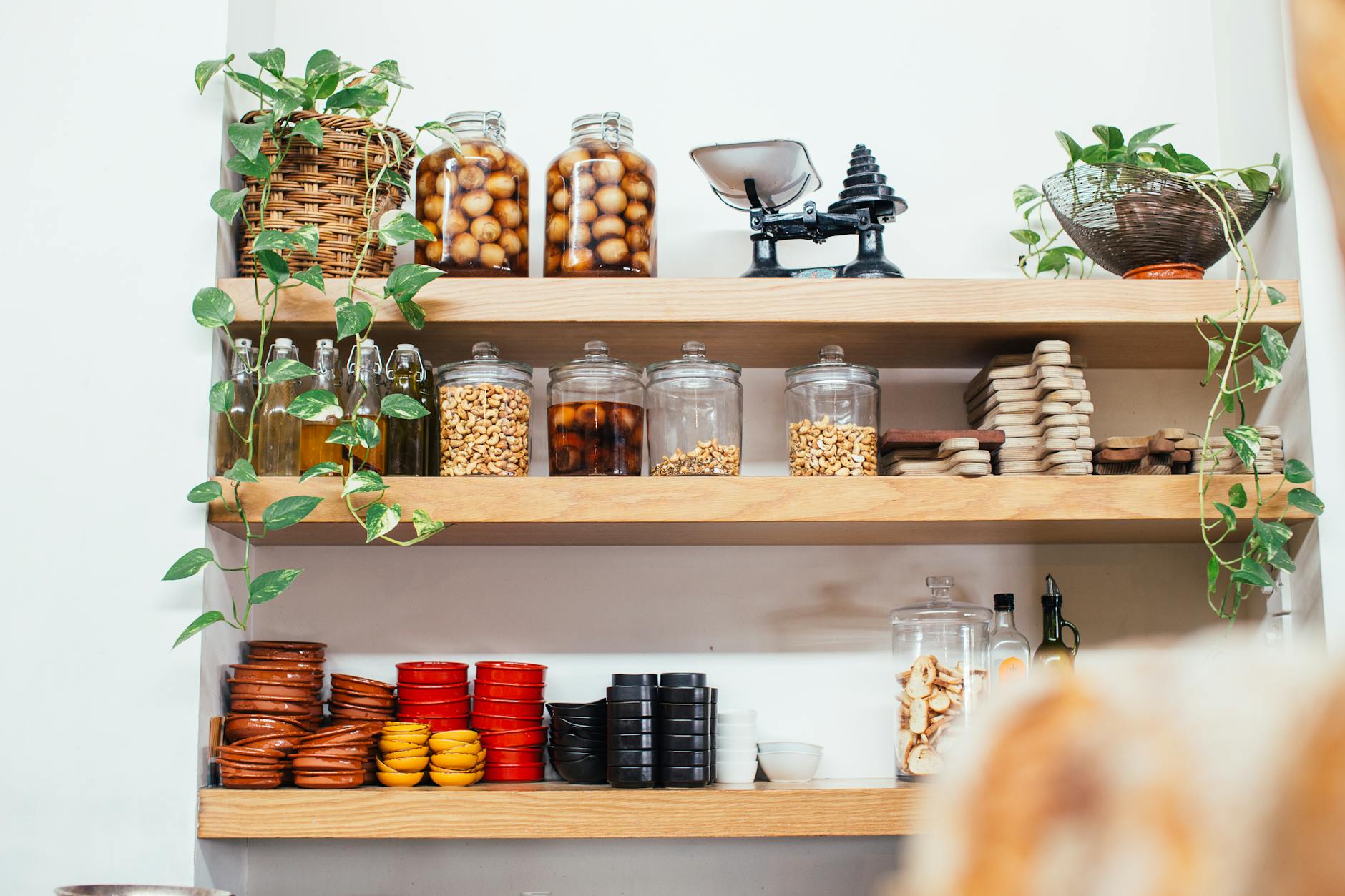
Pantry Calm: Making Storage Feel Warm, Not Clinical
There is a certain kind of pantry that looks impressive in photos and slightly exhausting in real life. Every jar is labeled. Every shelf is measured.
Every container matches. And yet, when you open the door before dinner, it can feel less like a helpful system and more like a quiet test you are failing. That is why pantry calm matters.
Not as a design trend, but as a way of making storage feel human. A calm pantry does not need to look perfect. It needs to be easy to use on an ordinary Tuesday.
It should make room for the half-used pasta box, the cereal the children actually eat, the tea you reach for without thinking, and the snacks that live a little crookedly on the top shelf. Practical choices can absolutely feel warm. In fact, in real homes, warmth usually comes from practicality.
Warmth starts with what you decide to keep visible
A pantry becomes clinical when it tries to hide the lived-in parts of food storage: opened packets, mismatched lids, backup groceries, and the loose collection of things that never quite fit into a category. But those are the things that tell you how a household really runs. Instead of aiming for a display, think about what you want to be seen first.
Often it is the everyday things: breakfast items, dinner staples, school snacks, tea, coffee, baking flour. These are not decorative objects, but when they are grouped with a little care, the pantry starts to feel steadier. One simple shift is to give the most-used food groups clear but forgiving homes.
A basket for breakfast. A tray for jars and oils. A shelf zone for baking ingredients.
Nothing has to be identical. The point is to reduce the small daily search that makes a kitchen feel tiring. If your pantry is especially tight, the logic matters even more.
A calmer storage setup for narrow spaces can keep things practical without forcing everything into one rigid system.
Matching containers is optional; matching rhythms is not
People often reach for uniform containers because they seem to promise peace. And sometimes they do help. But in many homes, too much uniformity creates a strange distance.
Food starts to feel like inventory instead of dinner. A warmer approach is to choose storage that matches the way your household actually moves. If one shelf needs quick access, use open baskets or clearly grouped tubs.
If another shelf holds flour, rice, or snacks that stay put for weeks, containers can be more contained there. If some items are best left in their original packaging, that is fine too. This is where pantry calm differs from a purely aesthetic approach: it respects use before style.
A bag of pasta does not become more useful because it was decanted into a pretty jar. If the jar helps you see what you have, great. If it just adds a step, it is not necessarily improving the room.
Warm storage choices tend to answer a few practical questions: - Can I reach this without moving three other things? - Will I remember what is inside? - Does this make cleanup easier after a busy day? - Is this storage helping the room feel settled, not staged? These are small questions, but they shape the mood of the whole kitchen.
A pantry feels kinder when it leaves room for imperfect life
One reason some storage systems feel cold is that they assume every item is stable, every week is predictable, and every household behaves the same way. Real homes do not work like that. Children change what they eat.
A busy week means the groceries are shoved in faster than they are sorted. Someone buys an extra tin of tomatoes because they forgot there were already two at the back. There is a holiday when baking supplies multiply.
There is a stretch of time when nobody touches the lentils. A warm pantry can absorb that without falling apart. That means leaving a little breathing room in each zone.
Not every shelf should be packed edge to edge. Not every basket needs to be full. Empty space is not wasteful when it gives your pantry a chance to handle ordinary life.
It also helps to keep a few categories flexible. I like the idea of “useful loose things”: onions that are not yet stored away, bread that needs a day on the counter, snacks waiting for school bags, the random packet that doesn’t justify a whole container. If you allow for a small amount of looseness, your pantry stops demanding constant correction.
Light, texture, and the feeling of being at home
Pantry calm is not just about containers. It is also about atmosphere. A shelf lined with pale plastic bins can feel efficient but emotionally flat.
A pantry with some texture—woven baskets, glass, wood, paper labels, fabric liners—often feels softer, even if the layout is just as organized. The point is not to create a rustic theme. It is to let the space feel connected to the rest of the home.
If the pantry is visible from the kitchen, think about what your eye sees first. A few warm materials can soften the hard edges of shelving and packaging. Even something simple, like decanting a frequently used ingredient into a jar you enjoy handling, can make the room feel more settled.
This is where storage overlaps with the broader feeling of the home. The same calm you might want from thoughtful shelving choices for a home layout can apply on a smaller scale inside the pantry: the room should support how you live, not ask you to perform tidiness.
The gentlest systems are the ones you can keep
A pantry only stays calm if it is easy to return to. That is the part people sometimes overlook. It is not enough for a system to look lovely on day one.
It has to survive a week of groceries, a tired evening, and someone else putting things away. The best systems are usually the ones that reduce decision-making. When a shelf has one job, cleanup gets simpler.
When a basket has one category, restocking becomes obvious. When similar things live together, you spend less time hunting and more time cooking. This is also why it can help to group by routine instead of by type alone.
Morning food belongs near morning food. Baking items belong near each other. Cans and jars that are used together can sit together.
If your pantry supports the way your days unfold, it feels warmer because it feels responsive. For some households, that includes making room for the practical small objects that travel through the kitchen every day. Drink containers, lunch gear, and the little accessories that support routines can be just as important as the food itself.
A quietly organized approach to everyday drink storage can keep the pantry from becoming a catch-all shelf for everything that does not belong elsewhere.
Calm is a feeling, not a finish line
The most comforting pantries I have seen were not flawless. They were legible. You could tell where things went, even if a few labels were crooked or the snack shelf had clearly been raided.
There was evidence of life, but not chaos. That is usually the balance worth aiming for in storage & organisation: enough structure to make the room easy, enough softness to keep it human. If you are starting again, begin with what gets reached for most.
Make that part easier first. Then let the rest follow at a pace your household can live with. And if your pantry is narrow, awkward, or just slightly resistant to order, the next read offers a practical way forward without asking you to give up the space you already have.