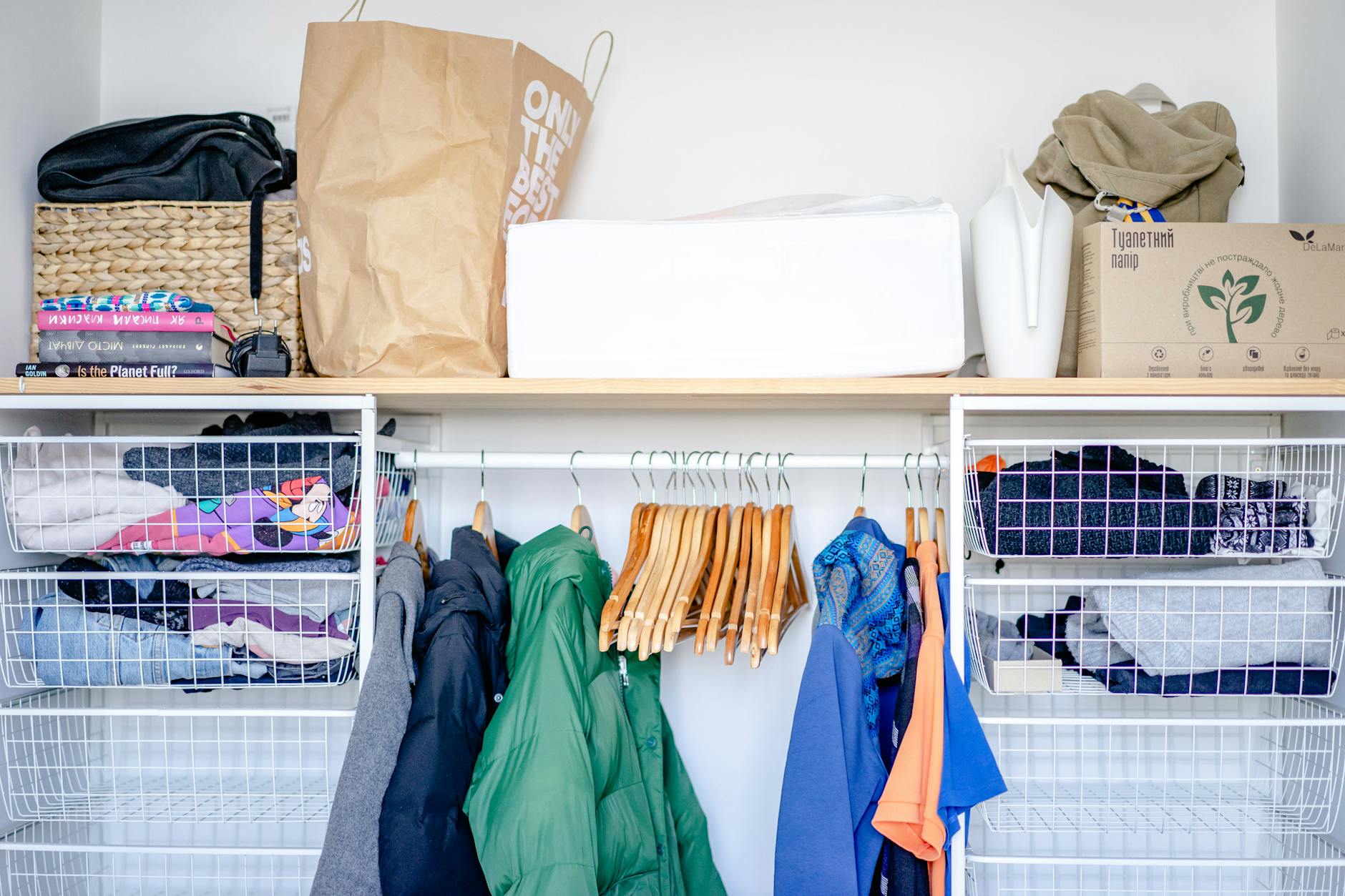
Packing for a trip is usually framed as a suitcase problem. But in real homes, it is often a room problem first. The night before travel, the bedroom becomes a temporary staging area: open bag on the chair, passport on the dresser, toiletries on the bedspread, charger trailing off the nightstand. One person is folding shirts. Another is looking for socks. Someone else is deciding whether the power bank belongs in the carry-on or the tote. By morning, the room can feel less like a place to rest and more like a place that has been briefly overrun by decisions. That is where one overlooked detail changes everything: a dedicated packing catch-all. Not the suitcase itself. Not the perfectly rolled outfits. The small container, tray, tote, or basket that gathers the in-between items before they scatter. In the category of Storage & organisation, this is the kind of small habit that quietly steadies a whole room.
The real mess is not the packing
Travel packing rituals are rarely about the clothes. They are about the little objects that appear at the last minute and never seem to have a proper home. A lip balm.
A pair of earbuds. Vitamins. Hand sanitizer.
The hotel-size shampoo you meant to keep separate. A folded itinerary. A spare phone cable.
These are not dramatic items, but they are the ones that create visual noise. Left loose, they turn every flat surface into a waiting room. A catch-all gives those things a temporary address.
It does not need to be decorative, though it can be. It does not need to be large, though it should be big enough to hold the fragments of travel prep. What matters is that it is consistent.
When packing rituals have one reliable landing spot, the room stops feeling like it is being assembled from scratch. That steadiness matters most in bedrooms, where visual clutter often reads as mental clutter. A bed piled with “just for now” items can make even a tidy room feel unfinished.
A basket by the dresser or a tray on top of a chest creates a small boundary: this is where travel prep lives, and everything else stays calm.
Why one small container changes the whole room
There is something quietly satisfying about a room that has a place for the small things. Not because every item is hidden away, but because the room no longer asks you to remember where everything is. The packing tray becomes a kind of pause button.
Instead of wandering from bedside table to laundry basket to kitchen counter, you gather the essentials in one place and return to them when you are ready. That is the shift: less searching, less backtracking, less mental noise. In practice, this can be as simple as: - a shallow basket for passports, chargers, and tickets - a zip pouch for medication and tiny toiletries - a lidded box for jewelry and watch accessories - a tote that holds packing cubes and last-minute items - a tray that keeps “tomorrow morning” things visible but contained The form matters less than the function.
The point is to keep travel essentials from becoming room clutter. If you already like a practical, room-first approach to storage, you may recognize the same logic in smart storage solutions for narrow kitchen spaces: the solution is not usually more space, but a better shape for the things you actually use.
The packing ritual that calms the bedroom
A good travel ritual is not about being perfectly prepared. It is about reducing friction. One of the most effective versions is surprisingly ordinary: 1.
Set one container in the bedroom before you begin. 2. Place all travel-related small items there as you remember them. 3. Pack the suitcase in one stretch, rather than moving items from room to room. 4.
Return anything you are not taking straight back to its home. 5. Leave the catch-all empty at the end, ready for next time. That last step may sound minor, but it changes the room overnight.
An empty catch-all says the work is done. The trip is in motion. The bedroom can go back to being a bedroom.
This is especially helpful in shared homes, where travel prep tends to spill into everyone’s routines. When the packing zone is defined, other people do not have to guess whether the bedside table is “available” or whether the charging cable under the lamp is part of the trip. The whole room becomes easier to live in.
For households that already manage daily essentials with small systems, the habit will feel familiar. The same thinking shows up in how to keep drinks ready without cluttering your space: keep the useful things close, but give them a clear place so they do not take over the room.
What to choose as your packing catch-all The best container is the one you will actually use, but a few details help.
Pick something visible If the goal is to prevent forgotten items, a clear or open container can help.
A lidded box may look tidier, but if the lid makes you ignore what is inside, it will not support the ritual as well.
Keep it room-sized, not suitcase-sized
This is not a second bag for the trip. It is a staging area for the room. If it is too large, it becomes another thing to manage.
If it is too small, it overflows and defeats the point.
Make it easy to empty A catch-all should be simple to clear at the end of packing.
If it has too many compartments or closures, it can become one more task. The calmer choice is often a shallow basket, tray, or pouch system with one obvious home for each type of item.
Let it be ordinary Sometimes the most effective solution is not a matching set or a styled travel station.
It is a basket already living in the bedroom, pulled into service for two nights each month. A useful object earns its place by reducing effort, not by looking impressive. That same practical, human approach is what makes a room feel lived in rather than staged.
It is the idea behind a calmer storage setup: not perfection, but ease.
The overlooked detail is really a boundary
The small packing detail that changes the whole room is not the basket itself. It is the boundary it creates. A boundary between everyday life and travel prep.
Between “in progress” and “done.” Between a bedroom that is doing too many jobs and one that can return to being restful. That is why this tiny habit feels bigger than it looks. It protects the room from the scattered middle of packing, where everything is almost sorted but not quite.
It keeps the essentials close without letting them spread. And it makes departure feel slightly less rushed, because the room is no longer competing with the suitcase. In a category like Storage & organisation, the best ideas are often not the grand ones.
They are the small, repeatable ones that fit real homes and real schedules. A catch-all by the bed may not seem like much, but it can be the difference between a bedroom that looks temporarily taken over and one that still feels like a place to breathe. If you are in the mood to keep that practical thread going, the next read looks at what changes when you spend a little more on the bag that carries your lunch—and which details actually matter when the day gets busy.