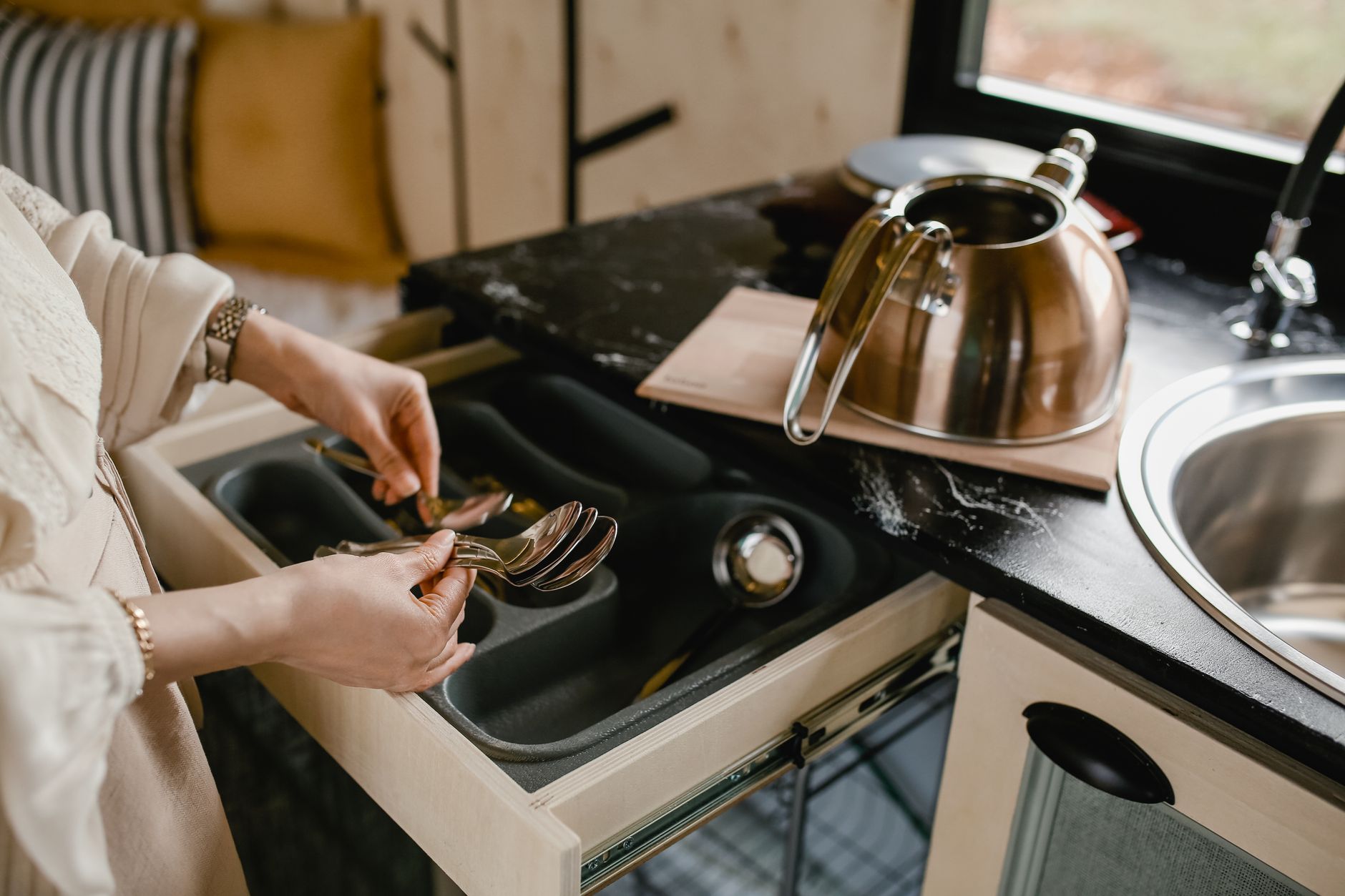
Drawer routines can sound a little severe at first, as if every spoon, corkscrew, and tea towel needs a rulebook. But in real homes, drawers are usually not a system first. They are a habit. They are where loose things land, where the morning rush gathers speed, and where small decisions either make the day easier or add a tiny layer of friction. That is why the most useful drawer routines are rarely the most polished ones. They are the ones that feel warm enough to live with. In the category of Storage & organisation, drawer routines are less about achieving a perfect interior and more about making practical choices that still respect the way a home actually moves.
Start with how the drawer is used, not how it looks
A drawer is only tidy if it supports a real routine. If you open it six times a day, it should feel simple enough to use half-awake. If you reach for it once a week, it can hold the awkward extras without becoming a trap.
That sounds obvious, but it changes the whole mood of organising. Instead of asking, “What should go here?” ask, “What happens here?” That question makes the result softer. A cutlery drawer might need less sorting and more ease of reach.
A kitchen drawer near the kettle might hold tea spoons, napkins, and the small tools that support a calm start to the day. A deeper drawer may be the right place for items that belong together by use, even if they do not match neatly on a label. For a more detailed look at how everyday utensils can work with the shape of a drawer and the rhythm of a kitchen, this guide to flatware and drawer fit is a helpful next step.
The goal is not visual perfection. It is the feeling that the drawer understands your life.
Let warmth come from ease, not excess
A warm drawer routine usually begins by removing one layer of effort. Not everything needs a divider. Not every section needs to be fixed in place.
Sometimes the kindest storage choice is the one that lets you put something back quickly, without needing to think about where it belongs in a precise grid. This matters in kitchens especially, where drawers tend to gather the items that support the day: peelers, measuring spoons, sandwich bags, foil, reusable containers, serving tools. These objects are practical, but they are also part of family routines, school lunches, late suppers, and shared cleanup.
If the storage feels clinical, it can make those ordinary tasks feel more rigid than they need to be. A warmer approach leaves room for human habits. It might mean grouping items by task rather than by category.
It might mean keeping the most-used tools in front, even if the arrangement is not symmetrical. It might mean accepting that one drawer will always be a little fuller because that is where the household truly lives.
Keep one drawer forgiving Every home benefits from at least one forgiving drawer.
This is the place for the items that do not justify a permanent, highly specific home but still need to stay easy to find. A spare battery pack, the tape measure, a few elastic bands, lunchbox lids, little serving tools, or the extra pen that always seems to vanish at the wrong moment. A forgiving drawer prevents the rest of the kitchen from becoming over-managed.
It takes pressure off the system. If your home has a narrow kitchen or a pantry that does not offer much depth, this idea becomes even more important. Narrow spaces can turn storage into a test of precision, and that is where clutter often sneaks back in.
A calmer approach is to keep the arrangement simple and choose solutions that fit the space without demanding constant correction. The same thinking applies beyond drawers too, especially in compact rooms, as seen in smart storage choices for narrow kitchen spaces. The point is not to store less for the sake of minimalism.
It is to store in a way that leaves room for a household to be imperfect.
Use labels gently, or not at all
Labels can be helpful, but they can also make a home feel overly managed if they are used too aggressively. In a warm drawer routine, labels should guide rather than discipline. A handwritten note inside a drawer can be enough.
So can a simple grouping that everyone in the home understands without explanation. In some homes, the most effective label is familiarity. If the batteries always live in the same back corner and everyone knows it, the drawer has done its job.
If the tea towels are folded in a way that makes them easy to grab, that may be clearer than a label ever would be. The right system is the one that reduces small interruptions. This is especially true for storage that sits close to everyday use.
Drawers near the prep area, sink, or coffee station are often better when they are intuitive rather than formal. If you are deciding how to keep tools or holders close at hand without crowding the counter, these rack and holder ideas for different storage spots may help you think through the tradeoffs.
Make maintenance tiny enough to keep
A drawer routine only stays warm if it is sustainable. That means maintenance should be brief. Not a full reset, not a seasonal overhaul every time, but a small check-in.
Put away what has migrated. Remove one duplicate. Fold the dish towels again.
Wipe crumbs before they become part of the system. Small homes, busy homes, and family homes all tend to work better when upkeep is light enough to happen in real time. This is where people often go wrong.
They build a beautiful arrangement and then treat upkeep like a separate project. But drawers are lived with daily. They need habits that fit into the ordinary rhythm of cooking, clearing, and getting out the door.
A useful test is whether the drawer can recover from a busy week. If it can absorb a few extra items and still make sense by Sunday evening, it is probably working. If every minor shuffle turns into a mess, the system may be too delicate.
Good drawer routines are resilient. They do not collapse because someone tossed in scissors without thinking.
Let the kitchen tell you what belongs nearby
The best drawer routines feel almost invisible because they follow the shape of the household. Coffee tools live near coffee. Lunch items live near lunch prep.
Flatware lives where the table gets set. Containers live where leftovers are actually packed away. When storage follows activity, the whole kitchen becomes less demanding.
That can also affect how you handle related items like food storage. If one drawer is constantly hosting lids, wraps, and small containers, it may be a sign that the nearby shelf or cabinet needs a different arrangement. Storage becomes easier when you stop forcing every category into a fixed idea and start letting use cases lead.
For a broader look at that kind of thinking, this guide to food storage solutions offers a useful companion perspective. A warm storage setup does not try to be emotionally neutral. It makes room for the real texture of home life: the quick grab, the shared drawer, the item that belongs to two people at once, the habit that only makes sense in one specific kitchen.
That is what keeps the routine feeling human. Drawer organisation does not need to look clinical to be effective. In fact, the more a drawer serves real life, the less it should resemble a display.
The best routines are the ones that quietly support breakfast, cleanup, lunch prep, and late-night tidying without asking for applause. And if you want to carry that same calm feeling into the rest of the kitchen, the next read about keeping drinks ready without adding clutter is a natural place to go.