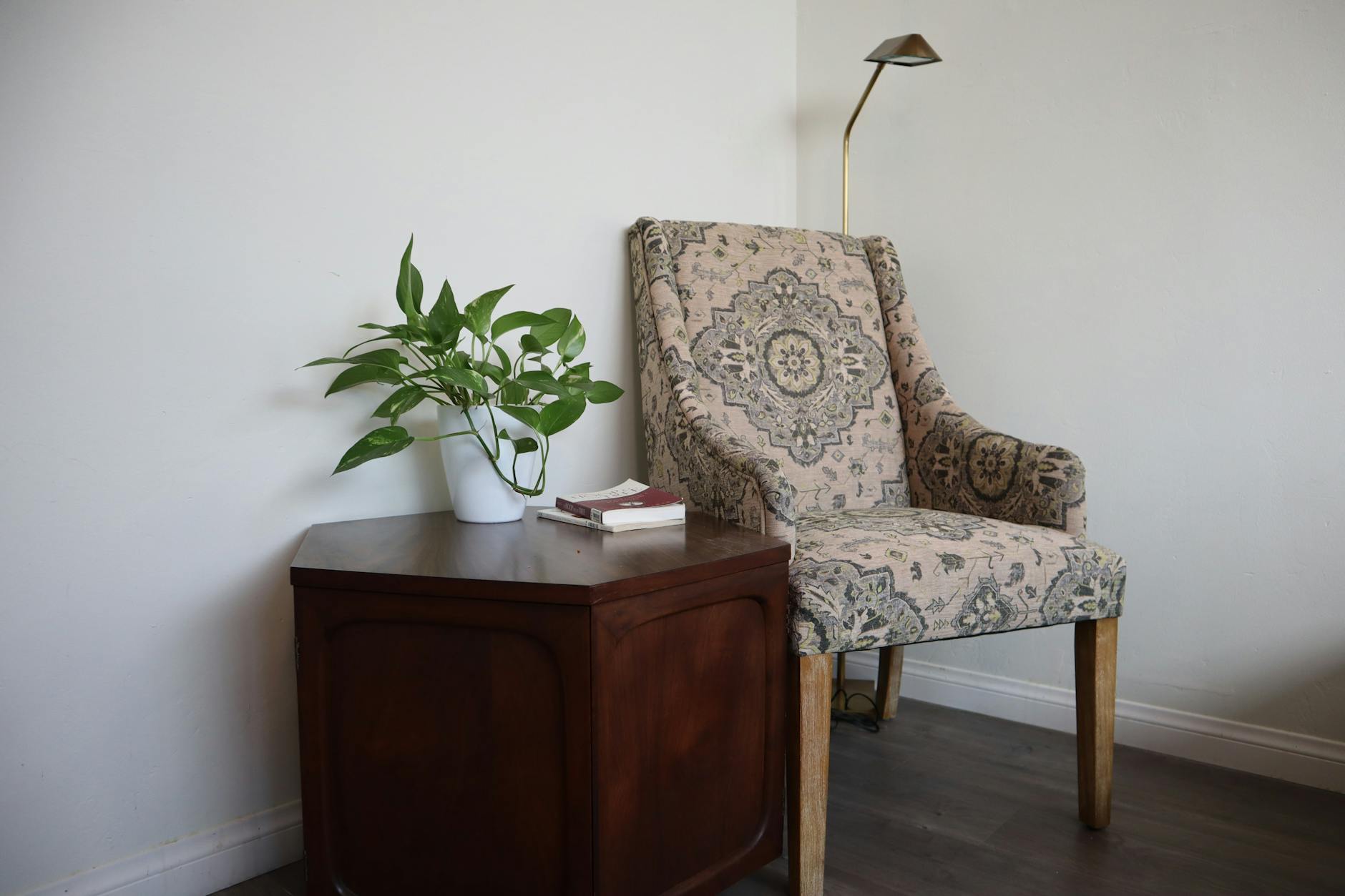
Quiet Corners That Still Work on Busy Days In the
Cozy Home category, I keep coming back to the same question: how do we make a room feel like ours when life is moving too quickly to enjoy it properly? A reading corner is one of those ideas that sounds almost sentimental at first. A chair, a lamp, a book, maybe a blanket folded nearby.
But in real homes, the best quiet corners are rarely only for reading. They become the place where you answer one last message, where a child sits with a picture book while dinner finishes, where a sweater gets tossed for the afternoon and retrieved later. The corner stays useful because it is not precious.
It is simply ready.
A corner does not need to be empty to be calm
There is a small myth around reading spaces: that they should be untouched, styled, and waiting for you in complete stillness. Most homes do not work that way. Most of us need corners that can shift with the day.
That may mean the same chair also holds laundry for ten minutes. It may mean the side table carries a mug, a charger, and a stack of library books before it returns to being a quiet spot again. A room feels more livable when its calmness survives interruption.
That is why I think of reading corners as flexible pause points rather than fixed destinations. They can be simple and still feel intentional. A comfortable seat, a usable light source, and a surface within reach often matter more than a fully finished look.
If the room already has to do several jobs, then the corner should support that reality instead of resisting it.
Start with one seat that earns its place
The seat is usually the anchor. It does not have to be the biggest or prettiest object in the room, but it should be one you actually want to return to. In a busy household, that means thinking about how the chair or bench lives on ordinary days.
A reading corner works better when the seat is easy to settle into, easy to clean, and not so delicate that it becomes off-limits. I tend to favor pieces that feel sturdy enough for daily use and relaxed enough to soften a room that already does too much. If you are choosing for a lived-in space, it can help to think in terms of comfort and maintenance together, not separately.
The same practical mindset applies when selecting a chair for a small, lived-in corner. The point is not to build a perfect retreat. It is to make a seat that still feels welcoming after a long workday, a spill, or a pile of school papers.
Let storage do some of the quiet work
A reading corner stays useful when it can hold the things that naturally gather there. Books, spare glasses, a notebook, a charging cable, a bookmark, a candle that only gets lit in the evening. Without some kind of storage, these little items drift into clutter fast.
This is where shelving becomes part of the mood, not just the function. A narrow wall shelf, a low book ledge, or a small open unit can keep the corner from turning into a catchall while still allowing it to feel personal. I like storage that can carry both the practical and the beautiful: a couple of books, a bowl for small objects, perhaps a plant or framed photo.
If you are shaping a room that has to keep working during a busy season, a calmer storage setup can make the difference between a corner that disappears under daily life and one that remains useful. The best version is usually not the fullest one. A little breathing room makes the whole area easier to return to.
Light should be gentle, but not decorative only
Reading light is one of those details that quietly decides whether a corner gets used. A lamp can make a room feel cozier, yes, but it also needs to do its job without making you squint or rearrange yourself every time you pick up a book. Busy days often end at odd hours, so I like lighting that works without ceremony.
If a corner depends on daylight alone, it may look beautiful in the morning and become unusable by evening. A simple lamp nearby keeps the habit alive after the rest of the house has gone dim. The same idea applies to the objects around it.
A candle can make a reading corner feel softened and finished, but it should support the mood rather than overwhelm it. If scent plays a part in how your home resets at the end of the day, candles that make a home feel cozy can help the corner feel like a quiet landing place instead of another task to manage.
Keep the surrounding pieces easy to move around
One thing I have learned from real homes is that a reading corner works best when it does not block the flow of the room. In a busy house, people need to pass through, set things down, and change the use of a space quickly. That means keeping nearby pieces light in visual weight and easy to shift if needed.
A small table is often more useful than a large one. A rug can define the space without making it feel separate from the rest of the room. Soft textiles help, but they should be low-drama in daily life.
A cushion that can be straightened in one motion is more practical than one that needs careful arranging every afternoon. Even decorative accents should feel like they belong to a room that is lived in. A vase with a single stem, a framed print, a textured throw, a book held open by habit rather than display: these are the kinds of details that make a corner feel human rather than staged.
For spaces that need warmth without excess, timeless accents that warm up a room do a lot of work quietly.
The room can change jobs without losing its softness
The nicest thing about a reading corner in a busy home is that it does not have to stay only one thing to remain meaningful. It can be where you read in the morning, where someone waits for a ride after school, where you fold a blanket, or where you sit for five minutes before starting dinner. A useful room is not one that avoids interruption; it is one that can absorb it gracefully.
That is the real appeal of quiet corners. They let a house keep its rhythm without becoming rigid. When life gets busy, a room does not need to be ideal to still be inviting.
It only needs a few steady choices that make returning feel easy. And if you are thinking about how to keep that sense of order going through the rest of the home, the next read offers a practical place to begin.