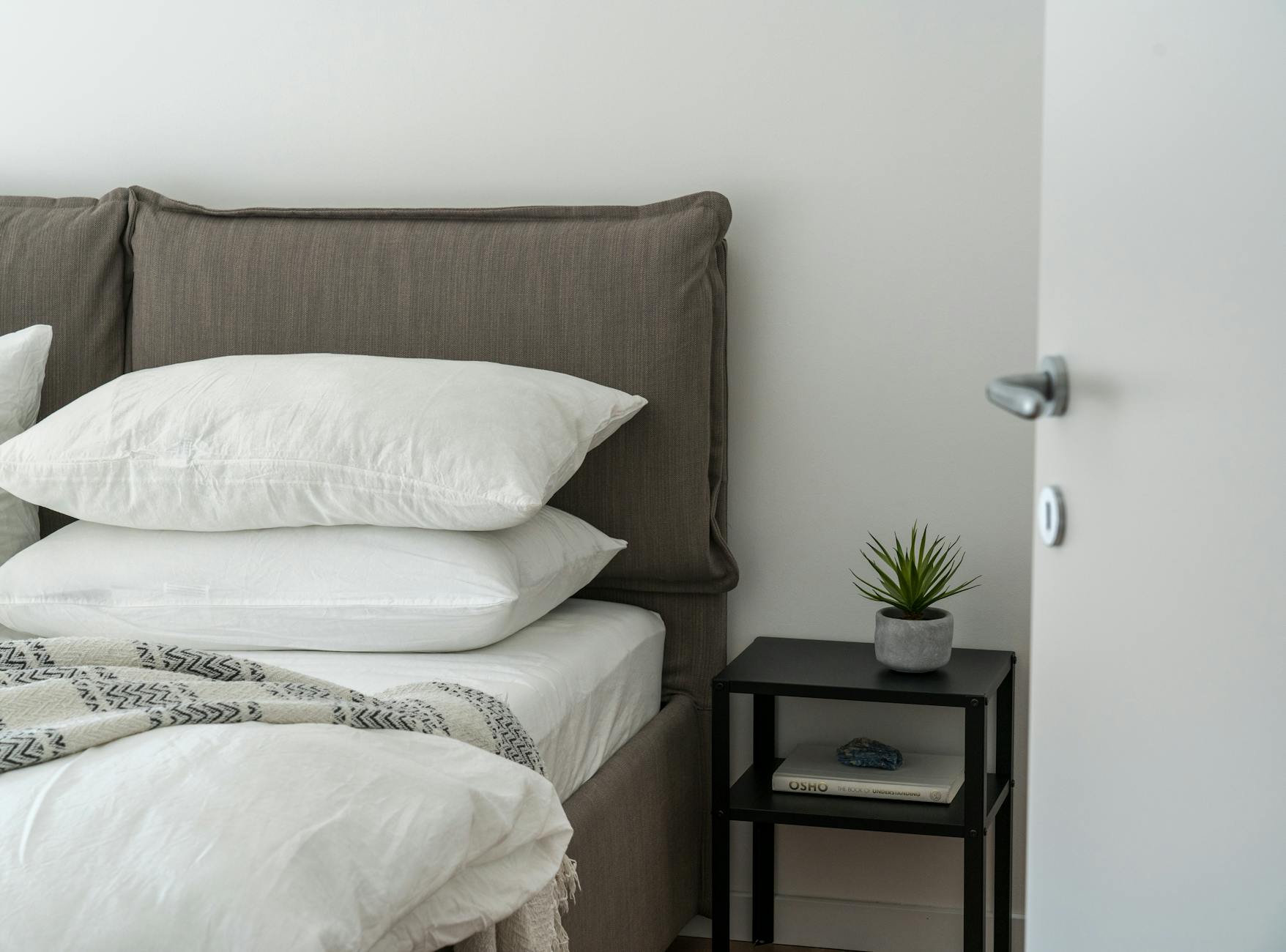
The Small Detail That Makes a Guest Room Feel Truly Ready
There is a moment, usually just before the doorbell rings, when a guest room either feels quietly cared for or not quite finished. The bed is made. The lamp works.
Fresh towels are folded somewhere nearby. And yet the room still needs one thing to make it feel genuinely ready—not staged, not decorated, but ready in the way real homes need to be. In the cozy home conversation, we often talk about the big, visible gestures: a new rug, a softer lamp, a better curtain.
But in guest-ready comfort, the detail that changes the whole room is often the one guests notice only because it removes a small point of friction. They may not name it, but they feel it immediately. For many homes, that detail is the pillow.
Why a pillow can change the whole room
A guest room is doing a different job from a bedroom you use every night. It has to welcome different sleep styles, different sensitivities, and different expectations. One person wants a flatter pillow.
Another wants a taller one. Someone sleeps on their side and needs support; another falls asleep on their back and wakes up with a stiff neck if the setup is too high. That is why pillow choice can change the entire impression of a room.
Not because pillows are decorative—though they can be—but because they are one of the few things a guest interacts with immediately and intimately. If the pillow works, the room feels thoughtful. If it does not, the room can feel like it was prepared in a hurry.
This is one of those overlooked details that looks small from across the room and feels major from the bed.
The guest room test: comfort without assumptions
A well-prepared guest room does not assume one sleep style is the default. It leaves room for variation. That usually means thinking less about matching and more about flexibility.
A firm pillow may feel supportive to one guest and unyielding to another. A soft, lofty pillow may feel inviting to one person and impossible for someone else who needs neck alignment. In real homes, guest comfort is often improved not by making a bed look more perfect, but by making it easier for a guest to adjust their own setup.
I like to think of this as hospitality through choice. A room feels guest-ready when it offers a small amount of control: a second pillow within reach, a blanket that can be added or removed, a surface beside the bed that is clear enough for glasses or a phone. These are tiny signals, but together they say, “You can settle in here.” If you are rethinking the bed itself, a guide to matching pillows to room fit, maintenance, and tradeoffs before choosing what fits can help you sort out what actually belongs in a guest space.
The same room, but softer at the edges
What guests remember is often not the style of a room, but whether it let them relax. A room can have beautiful finishes and still feel cold if it lacks the small comforts that soften the edges of being away from home. That softness can come from a good pillow, yes, but it also comes from a few neighboring choices.
A lamp that gives off warm light instead of a bright overhead glare. Curtains that allow privacy without making the room feel sealed off. A surface that holds a glass of water, a book, or reading glasses without clutter.
When a room needs help feeling calmer, I often look at the surrounding details rather than the obvious centerpieces. The right window treatments for light control, privacy, and soft daylight can change the mood more than a decorative object ever could. So can a carefully placed mirror, especially in a smaller guest room that needs brightness without busyness; mirrors for small rooms, vanity corners, and brighter walls can help a room feel more open without adding clutter.
But even then, the bed remains the anchor. If the pillow is wrong, the rest of the room has to work harder.
What “ready” looks like in a real home In a magazine-perfect room, “guest-ready” can mean neatly layered linens and a styled tray.
In real homes, it usually means something more practical and more generous. Ready means the pillow has been checked. It means the lamp switch is easy to find in the dark.
It means there is no stack of laundry on the chair. It means the guest is not walking into a room that looks like it was paused halfway through. I think that is why this detail matters so much in the guest-ready comfort version of a home.
It is not about impressing anyone. It is about removing little discomforts before they happen. A pillow may seem too ordinary to carry that much weight, but the bed is where a guest spends the most private hours of their stay.
If you want that room to feel welcoming, the sleeping setup deserves as much care as the visible styling. A soft throw or a vase on the dresser can help, but they are supporting characters. The pillow is part of the room’s welcome speech.
And because guest rooms are often multipurpose rooms—an office, a storage space, an occasional overflow space—it helps to keep the rest of the setup uncomplicated. A cleaner shelf, a calmer surface, or a single meaningful accent can make the room feel considered without making it feel crowded. Sometimes that is enough to let the pillow do its quiet work.
If you are also refreshing the room’s atmosphere, a few timeless accents to warm up your space can add warmth without taking over the room, while a guide to keeping your home smelling fresh without overdoing it can help the room feel cared for in a more subtle way.
The overlooked detail that tells the truth In the end, the smallest details tell the truth about how a room is used.
A guest room can look finished while still feeling improvised. Or it can look simple and still feel deeply ready. That readiness often comes down to whether the room supports real rest.
Not idealized rest. Not staged rest. Real rest, with all its ordinary preferences and small sensitivities.
A pillow is part of that, which is why it matters more than it first appears. When a guest sits down on the bed and immediately feels able to settle in, the room has done its job. Everything else becomes background.
That is the quiet power of one overlooked detail: it changes the whole room by making it feel like someone thought ahead. If you want to keep refining the bed itself, the next read is a natural place to continue with the choices that shape comfort most.
For a more practical next step, match pillows to room fit, maintenance, and tradeoffs before choosing what fits and best faux plants for low-maintenance greenery and small corners can help connect this journal idea to everyday home choices.