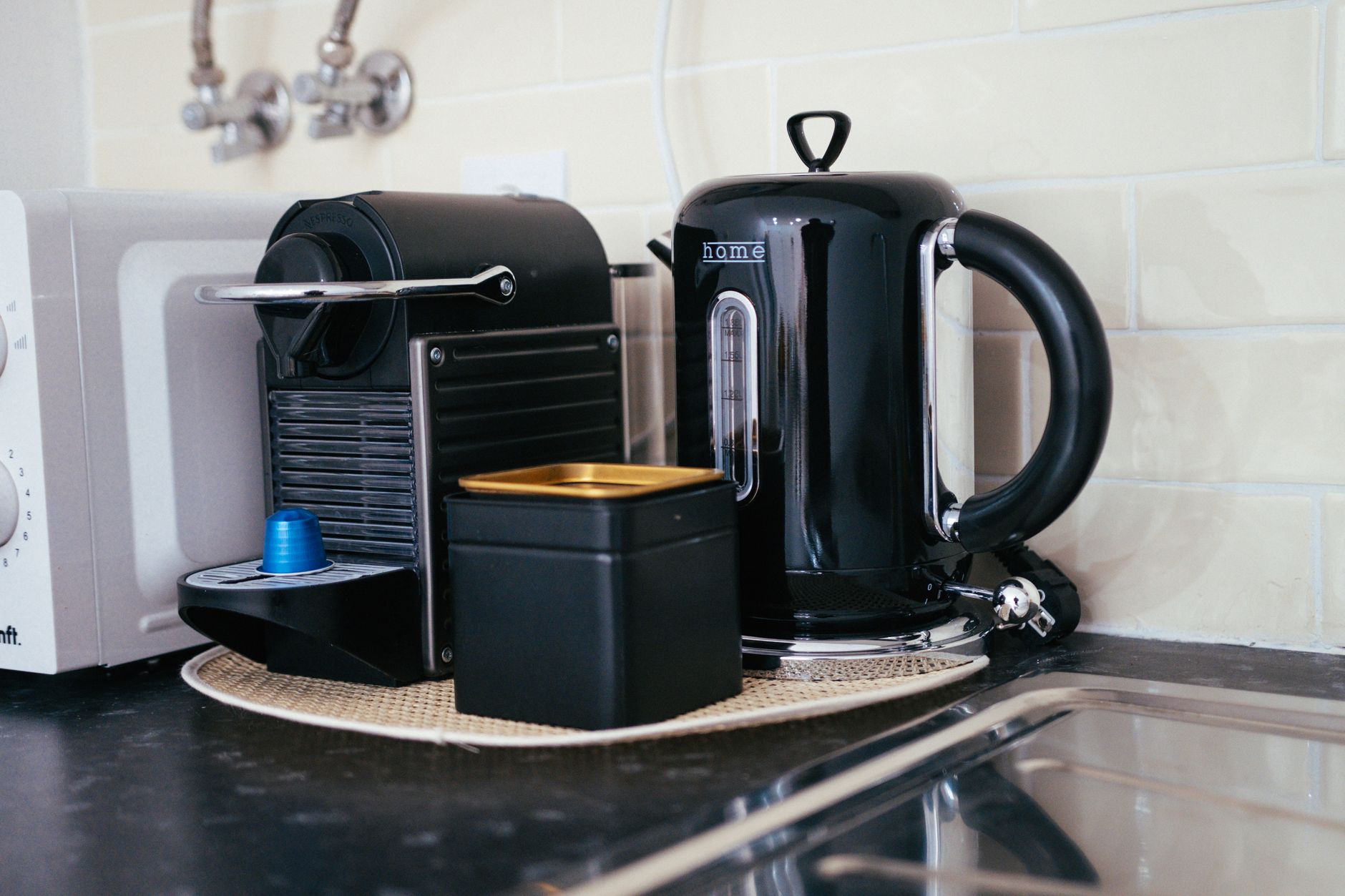
A Smaller, Smarter Coffee Corner for
Real Mornings A coffee corner sounds simple until it has to live in a real kitchen. In the tidy version, there is a tray, a machine, a pretty jar of spoons, and enough clear counter to make the whole scene feel intentional. In the everyday version, there is usually a charger, a mail stack, a half-used dish towel, and a person trying to get caffeine into a body that is not yet fully participating in the day.
That is where coffee corner practicality becomes less about styling and more about editing. When space is tight and patience is short, the best setup is the one that makes the first ten minutes easier without asking for a new habit, a new shelf, or a new level of discipline.
Start with the part you repeat, not the part you imagine
Most coffee corners fail for the same reason other kitchen areas do: they are designed around the idea of a morning, not the actual one. Real mornings are often fast, distracted, and slightly rude. So the first question is not what looks complete.
It is what gets used every day, without extra steps. For some homes, that means a kettle and a mug within reach. For others, it means filters, beans, and a grinder that does not require a second clearing of the counter just to begin.
If your coffee routine is mostly one cup before work, you do not need the full café feeling. You need a clear path from “I am awake enough to press a button” to “I have coffee.” Anything beyond that is optional. That is also why it helps to think in terms of fit, not fantasy.
The details that matter in small-space beverage setups are often the ones you only notice when they go wrong. The same practical mindset shows up in small kitchen tool choices that have to earn their place every day.
Protect the counter you actually have
A coffee corner can quietly eat a kitchen if every item is allowed to sprawl. The fix is not always buying less. Sometimes it is deciding where the line is.
One small tray can do a surprising amount of work. It gathers the moving parts, signals where the routine lives, and keeps the rest of the counter from turning into a drift zone. A narrow section of wall, the corner beside the toaster, or even the unused strip near a window can become enough if you stop asking it to hold everything.
The goal is not a showroom. The goal is a surface that can still support breakfast, a cutting board, or a lunch prep moment without needing a full reset first. That is why practical storage thinking matters across the kitchen, from beverage areas to prep surfaces and counter storage.
The habit is the same: keep only what belongs to the task within reach, and let the rest live elsewhere. If you cannot name the exact job of an item in the coffee corner, it probably does not need to stay there.
Fewer steps beat prettier steps
A beautiful setup that adds friction is not actually useful. Think about what happens between waking up and that first sip. Every extra motion matters: opening a cupboard for mugs, hunting for filters, moving a grinder, wiping a splash, reaching over a stack of things that have no business being there.
A practical coffee corner reduces those little negotiations. This is why some homes do better with a compact manual routine and others with a machine that handles more of the work. Neither is inherently better.
What matters is whether the setup matches the amount of effort you are willing to give on a weekday morning. If patience is limited, choose tools that forgive you. Lids that close easily, mugs that stack well, containers that do not scatter grounds everywhere, and items that are simple to wash and put back.
The less the coffee corner depends on mood, the more likely it is to survive a busy week. That same logic is useful when choosing cups and mugs that fit daily routines, because the vessel is part of the routine too. A mug that is awkward to handle or too large for your usual serving can slow the whole thing down in a way that feels minor until it repeats every day.
Let cleanup be part of the design
A coffee corner that is pleasant to use but annoying to clean will gradually become a corner you avoid. This is where real homes separate convenience from clutter. Can you wipe the surface in one pass?
Can the filter basket, spoon, and any containers be rinsed quickly? Does the setup collect dust, drips, and stray grounds in places that are hard to reach? If yes, it will ask for more attention than it gives back.
The smartest coffee corners tend to be the most boring to maintain. Smooth containers, washable pieces, and a layout that does not trap crumbs between objects make an enormous difference. Even the humble choice of where to keep the mugs can change the whole feel of the space.
A rack, shelf, or cabinet that lets you reach them without rearranging the world is worth more than a decorative arrangement you have to keep fixing. This is the same practical instinct behind fit-first beverage storage and station planning: when a setup is meant to be used daily, maintenance is part of its usefulness, not an afterthought.
Make room for what the room is already doing
The best coffee corner in a small kitchen is often the one that respects the other jobs the counter must do. Maybe that counter also handles lunch packing, after-school snacks, or the bowl where keys land. Maybe it is the only flat surface near the sink.
Maybe it has to survive being used as temporary storage for groceries, notebooks, or a cutting board while dinner gets started. In those homes, the coffee corner cannot occupy the whole stage. That means choosing only the essentials that truly belong there, and letting the rest move.
Coffee itself can live in the pantry if the container is easy to access. The grinder can stay tucked away if morning use is occasional. Extra syrups, seasonal mugs, and novelty tools can wait elsewhere.
A coffee corner becomes more livable when it is allowed to be modest. A small setup can still feel generous if it saves energy instead of spending it. That is the quiet difference between a corner you admire and one you actually use.
The point is ease, not perfection
A smaller, smarter coffee corner does not aim to impress. It aims to make the day slightly easier before the day has really started. That can mean one machine instead of three.
It can mean choosing storage that hides visual noise. It can mean accepting that the cleanest solution is also the calmest one. Most of all, it means admitting that space and patience are real limits, and designing around them with care.
When the coffee corner works, it disappears into the morning in the best way. You reach for what you need, make the drink, and move on without a small battle in the middle of your kitchen. If you want to keep building that kind of everyday fit, the next step is often in the details.
The site’s guide on how to choose coffee and tea that actually fit is a good place to continue, especially when the room is small and every inch matters.