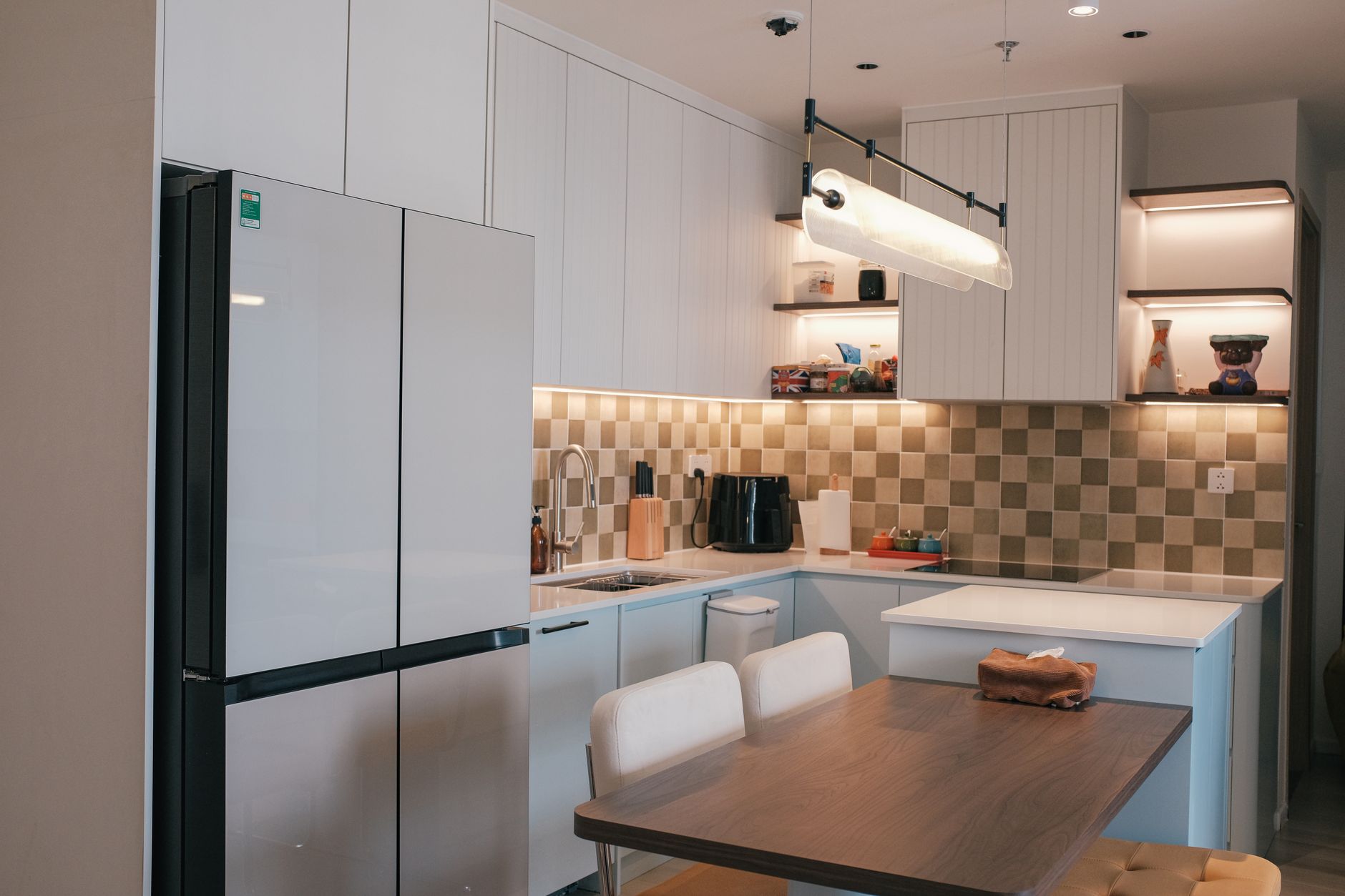
The Case for a Small Evening Reset Around Open Shelves Open shelving looks beautiful at the start of the day.
It is airy, honest, and often makes a room feel more lived-in than formal storage ever could. But by evening, the same shelves can start to collect the day in visible form: a mug left beside a stack of bowls, a cookbook not quite returned, the school lunch container that never made it back to the kitchen island. What feels charming in the morning can feel noisy after dinner.
That is where a small evening reset earns its place. Not a grand tidy-up. Not a perfect, magazine-ready arrangement.
Just a brief return to calm before bed or before dinner, especially in homes where open shelving is part of the furniture story.
Why open shelving asks for restraint
Closed cabinets forgive a lot. Open shelves do not. They show every mismatch of shape, color, and habit, which is part of their appeal and part of their challenge.
The point is not to treat them like display cases that need constant polishing. The point is to let them hold the things you use while keeping enough visual breathing room that the room can still rest. In real homes, restraint usually means fewer active items per shelf, more room around each object, and a habit of returning things to their places before the day piles up.
A shelf with three well-used items can feel calmer than one with ten decorative objects that must be rearranged each week. That same logic shows up in other pieces of furniture too. A calmer storage setup is rarely about hiding everything; it is about making the useful parts easier to live with.
The best open shelves work the same way. They do their job quietly.
The reset that takes five minutes, not fifty
An evening reset around open shelving does not need to become a chore. The goal is to make the space feel ready for the next stretch of the day. Start with what is already on the shelves and ask three simple questions: - What belongs here every day? - What is temporary and can go somewhere else? - What looks crowded, even if it is technically “put away”?
Usually, the answer is not to remove everything. It is to edit one or two shelves at a time. A bowl on the top shelf might stay.
The extra candle that keeps getting shifted around can go to a drawer. The stack of plates may be practical, but if it leaves no visual pause between them and the mugs, the whole shelf can begin to feel like a task list. A small reset creates negative space, and that space is what makes open shelving feel restful rather than busy.
The trick is to do this before the room becomes fully “off duty.” Before dinner, it can be part of setting the table. Before bed, it can be part of closing the kitchen down. Either moment works because it is already a transition point.
What to leave out, and what to tuck away
The easiest shelves to live with tend to hold categories, not everything. Dishes, glasses, a few serving pieces, maybe a favorite bowl or two. The rest can have homes elsewhere.
That is where furniture with drawers, doors, or deeper storage becomes useful. A dresser-like piece in a dining nook or kitchen-adjacent room can hold linens, candles, chargers, and seasonal items that do not need to sit in plain sight. If you are shaping a room around both display and function, it helps to think about how different pieces support the daily rhythm.
A guide to everyday dresser choices can be useful when the goal is not just storage, but storage that supports a calmer routine. The same restraint applies to decorative shelf styling. One framed print, one stack of bowls, one small plant is often enough.
When shelves are overloaded, the eye cannot land anywhere. When they are edited, even simple objects begin to feel intentional.
A shelf reset that fits the pace of dinner
Before dinner is often the best time to do this because the kitchen is already in motion. The countertop is being cleared, the table is being set, and the room is moving toward a shared meal. The shelf reset becomes part of that movement.
You might return the serving spoon, straighten the stack of plates, and remove the random mail that migrated into the kitchen earlier in the afternoon. If a shelf holds everyday dishes, align the front edge of the stack. If it holds glasses, leave enough space between rows that they do not look compressed.
If there is a shelf for cookbooks or ceramics, keep the arrangement easy enough that no one has to remember how it was styled in order to put something back. This is where open shelving can be honest about the home it serves. It does not have to be styled for a photo.
It only has to support the evening you are actually having. For rooms where eating happens near the shelving, nearby furniture matters too. The fit of the table and chairs influences how easily the space clears at the end of the day.
If you are thinking about the wider dining area, these guides on everyday dining tables and comfortable dining chairs can help you see how the whole room can stay manageable, not just the shelves themselves.
Before bed, make the shelf visually quieter
The bedtime version of the reset is usually gentler. It is less about function and more about visual rest. You are not preparing a big reset for tomorrow morning; you are making the room easier to look at when the lights go low.
That can mean removing one overfilled item, sliding a cutting board into a vertical slot instead of leaving it on display, or clearing a shelf that has become a temporary landing place. It can also mean keeping a little emptiness on purpose. A shelf does not need to be “full” to feel finished.
If your open shelving sits near a seating area, the same principle applies to the furniture around it. A low table with too many things on it can make the shelf feel crowded by association. The relationship between open surfaces matters.
A room with a simple coffee table arrangement and a restrained shelf can feel much more settled than one where every flat surface is competing for attention. That is probably the real case for restraint: not less personality, but less static. Space to move, space to set something down, space to end the day without the room asking for more.
A more forgiving way to live with open shelves
There is a quiet kindness in accepting that open shelving will never be the most hands-off storage choice in the house. It asks for a small return each day. In exchange, it gives you access, visibility, and a sense that the room is open rather than sealed up.
A before-dinner or before-bed reset is the simplest way to keep that exchange balanced. It is not about perfect styling. It is about making room for the next hour of your life.
A few items back in place, one surface cleared, one shelf given a little air. That is enough to change the feel of the whole room. And if the shelves are the part that keeps slipping out of balance, it may help to look at the surrounding furniture as well.
The next read on barstools chosen for everyday comfort and upkeep offers a useful way to think about the stools, counters, and routines that shape the same lived-in corners of the home.