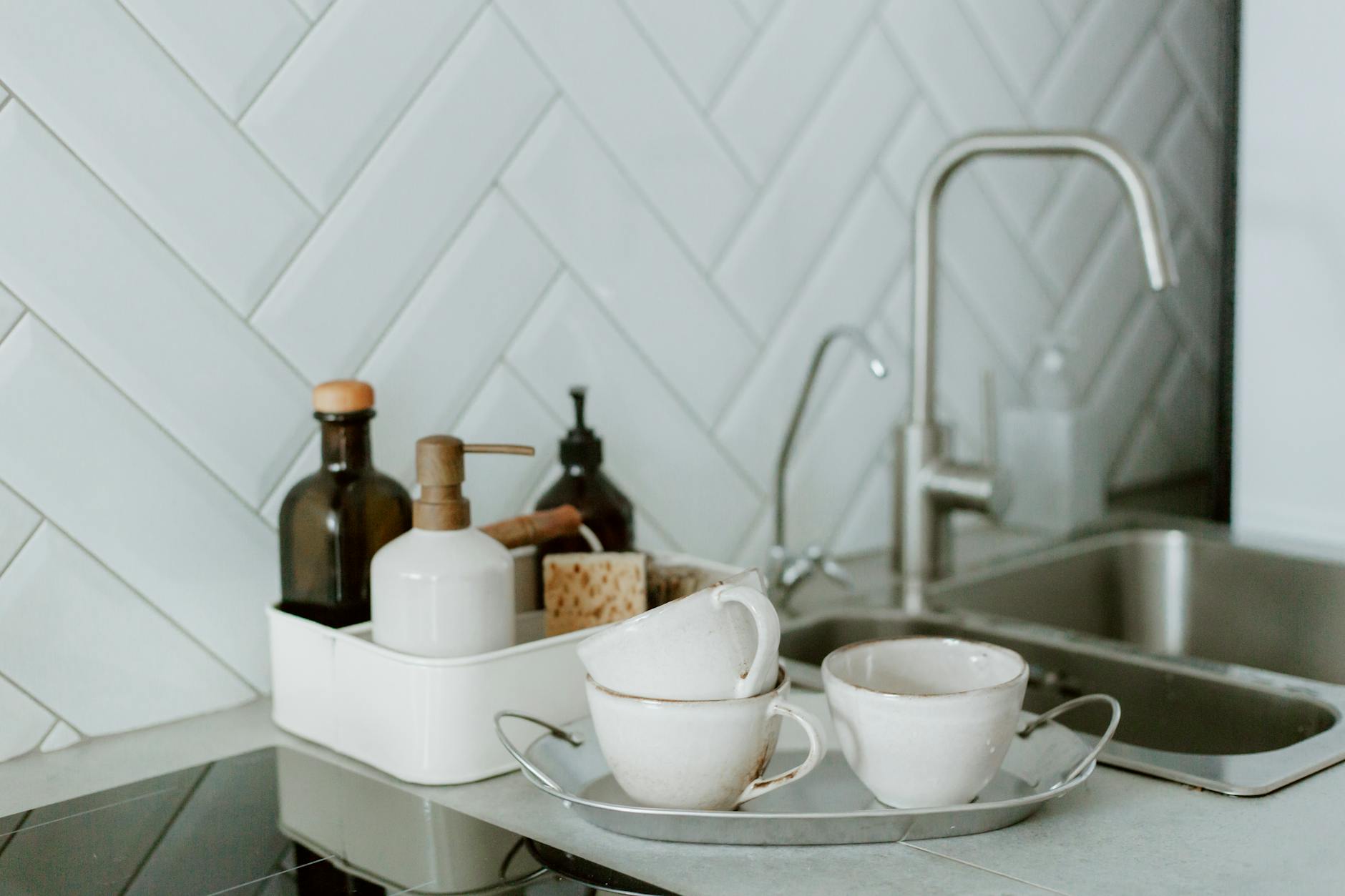
The detail that quietly changes cleanup
In most kitchens, cleanup is not really about scrubbing. It is about momentum. A sink fills, a counter clears, a dish gets rinsed, and the whole room either starts to feel lighter or begins to collect little interruptions.
That is why one overlooked detail can change the way a kitchen works: the finish, shape, and washability of the everyday things we touch first and last. When people think about easy cleanup choices in the kitchen tools category, they often jump to “dishwasher safe” and stop there. That matters, but in real homes the more useful question is simpler: what is easiest to live with after dinner, after coffee, after baking, or after the rushed weekday meal?
Cleanup gets easier when the room is built around fewer friction points.
What easy cleanup really looks like
Easy cleanup does not mean a kitchen has to look bare or behave like a showroom. It usually means the objects you use most do not ask for extra steps.
A mug that stacks neatly. A dinner plate with a glaze that wipes clean without leaving every fingerprint behind. A utensil set that does not trap sauce in a seam. A rug that can handle the splash zone near the sink. A grinder that does not shed crumbs across the counter every time you reach for it.
Those details sound small because they are. But they shape the room in a big way. They decide whether you pause to rinse, search for a cloth, or move on with your evening.
If you want a kitchen that feels easier at the end of the day, start by noticing where cleanup actually gets delayed. Often the problem is not the task itself. It is the object design.
Surfaces that forgive a little mess
The most helpful cleanup choice is usually not the most dramatic one. It is the one that forgives normal use.
That might mean choosing dinnerware with smoother glazing and fewer deep ridges, so sauces do not cling in the details. It might mean bakeware that releases food cleanly and does not require a long soak every time, especially if you cook often and want the evening to stay calm.
For that kind of decision-making, it helps to think beyond appearance and toward daily rhythm. If you are comparing forms and finishes, start with how bakeware can support an easier routine.
The same idea applies to dinnerware. A plate that looks elegant but is fussy to clean can quietly add friction to every meal. Meanwhile, a set that balances durability with a smooth surface can make both loading the dishwasher and hand-washing feel straightforward. If you are narrowing that category, dinnerware that balances style and practicality is worth a look.
The point is not to eliminate personality. It is to make sure personality does not come with extra cleanup work.
Why the counter starts feeling calmer
A kitchen can become mentally noisy when small items are scattered in ways that create more wiping, shifting, and re-stacking than necessary. This is why storage-friendly tools matter so much in the cleanup conversation.
Take salt and pepper grinders. In some kitchens, they live permanently on the counter and become part of the visual landscape. In others, they get tucked away between meals. The difference is not only about style. It is about whether they shed residue, wobble, or require constant repositioning.
A grinder that fits your habits can reduce the little trails of cleanup that build up around the stove and prep zone. If that sounds familiar, choosing salt and pepper grinders that fit your kitchen’s needs can help you think through the practical side.
The same is true for cups and mugs. A mug shelf that stacks well, a cabinet that holds handles without crowding, a shape that rinses easily: these are not glamorous details, but they keep the sink from becoming a staging area. For a more room-by-room way to think about that category, see cups and mugs by use case.
When cleanup feels effortless, it is often because the most-used things have a place that does not fight their shape.
Soft surfaces, hard truths
Kitchen rugs are another overlooked detail with an outsized effect on cleanup. A rug near the sink can make standing at the counter more comfortable, but it can also become a collector of splashes, crumbs, and damp footprints.
The right rug is not the one that pretends spills will never happen. It is the one that handles them gracefully. That means thinking about washability, texture, and where the rug will actually live. A rug that works well in an entryway may not make sense in a food prep zone. A low-profile option may be easier to shake out and clean than something with deep pile.
If you are weighing those tradeoffs, making the most of kitchen rugs for everyday use is a useful starting point.
This is one of those areas where the room changes the behavior. A soft underfoot surface can make a kitchen feel more settled, which can encourage tidier habits. People tend to wipe spills faster in a space that feels cared for. Comfort and cleanup are more connected than they first appear.
Small tools, fewer interruptions
Cleanup gets simpler when tools do not create secondary messes. A spoon rest that actually contains drips. A utensil holder that does not tip when full. A cutting board that is easy to lift, wash, and dry. Even a drawer organizer can change how much time you spend clearing the counter after cooking.
These are not luxury gestures. They are small design decisions that reduce the number of times you have to stop and think, “Where does this go now?”
That is why kitchen tools are worth considering as a system, not as isolated items. One easy-to-clean surface helps, but several well-behaved ones change the tone of the whole room. The kitchen stops feeling like a series of cleanup tasks and starts feeling like a place that resets itself with you.
You do not need every item to be perfect. You just need the main ones to be easy to return to.
When the details stop arguing
This is what people often mean when they say a kitchen just works. It is not magic. It is alignment.
The mugs fit the cabinet. The dinnerware rinses without drama. The bakeware does not demand an evening sacrifice of soaking and scraping. The rug can be cleaned without a long project. The grinders stay tidy. The counter clears quickly because the tools on it belong there and are easy to move when they do not.
That is the real theme of easy cleanup choices in kitchen tools: not cleanliness as a standard, but cleanliness as a feeling. A kitchen can be busy and still feel manageable if the objects in it are designed to cooperate.
Once one overlooked detail starts working better, the whole room feels different. The shift is subtle, but you notice it in the pause before you sigh, in the absence of a sticky patch you used to wipe twice, and in the way the sink looks ready sooner. A kitchen that cleans up easily is not just easier to maintain. It is easier to return to.
If you want to keep that practical, room-first thinking going, the next read on everyday cups and mugs is a natural place to continue.