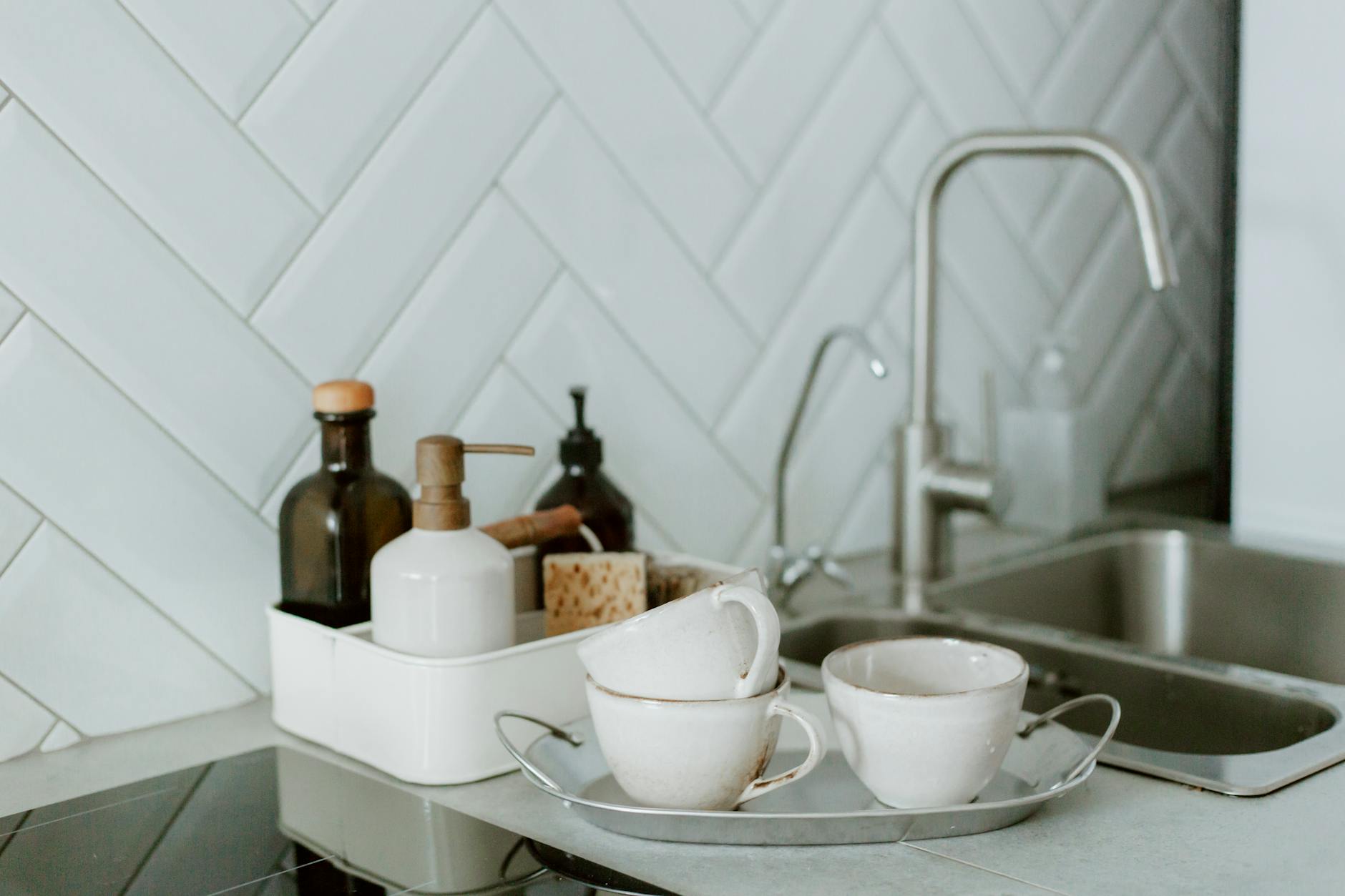
There is a particular kind of kitchen fatigue that has nothing to do with cooking itself. It shows up after the meal is done, when the counter is crowded, the sink has a line forming, and every extra part feels like one more thing to rinse, dry, and put away. In real homes, especially the ones where storage is already spoken for, easy cleanup is not a luxury detail. It is often the difference between a tool that gets used daily and one that quietly migrates to the back of a cabinet. That is why the most useful kitchen tools are not always the fanciest ones. They are the ones that respect two limits at once: space and patience. A tool can be clever, sturdy, even beautiful, but if it leaves too many parts behind or takes up too much room on the shelf, it may not earn its keep. In a small kitchen, the cleanup story matters as much as the cooking story.
Start with the parts you can see
When space is tight, the easiest cleanup choices are usually the simplest forms. Fewer pieces mean fewer places for food to hide and fewer decisions after dinner. Think of a wooden spoon, a stainless whisk with a straightforward shape, or a spatula that does not require a separate stand, cap, or charging base.
These are the tools that rinse quickly and dry without much fuss. This is also where material matters in a very practical way. Smooth surfaces are easier to wipe down than textured ones.
Wide handles are easier to clean than narrow grooves. Tools with sealed edges, fewer seams, and less ornamental detail tend to fit better into a busy routine because they do not ask for special treatment every time they are used. For many households, the real question is not whether a tool works, but whether it works cleanly enough to stay in rotation.
That is the quiet advantage of choosing smart kitchen tools for efficient cooking and storage: not just less effort during prep, but less friction when the meal is over.
The tools that earn their place are usually the ones that disappear fast
A cluttered kitchen often gets worse in small increments. One gadget needs hand-washing. Another needs a special brush.
A third has a lid that never quite dries before it gets put away. None of these things seem dramatic on their own, but together they create the feeling that cooking has produced a second job. Easy cleanup choices help interrupt that cycle.
They are the tools you can rinse immediately, set on a rack, and move on from. A compact grater with a single surface can be easier to manage than a boxier version with multiple sides. A bowl that nests neatly with others is more forgiving than one with an awkward profile that demands its own shelf space.
Even in baking, where specialty tools are sometimes unavoidable, it helps to choose pieces that store cleanly and wash without hesitation. The same calm logic applies when thinking about bakeware that feels like home: less strain at cleanup time often makes the tool feel more welcoming in daily use. Patience matters here because cleanup is rarely done in a perfect mood.
It is done after work, after family dinner, after the day has already used up most of your attention. The easier a tool is to reset, the more likely it is to be used again tomorrow.
Prioritize surfaces that forgive real life
The best kitchen tools for small homes are not always the ones that promise zero mess. Real cooking makes messes. The better question is which surfaces recover well.
A smooth cutting board that can be washed without concern for delicate edges is often more useful than a decorative one that needs extra care. A mixing bowl that stacks neatly and can go from prep to serving cuts down on both dishes and storage confusion. Even something as ordinary as a cup or mug can shape the cleanup rhythm of a kitchen; a shape that is comfortable to hold and easy to stack saves trouble at the end of the day.
If that is the kind of detail you notice most in your own kitchen, cups and mugs by use case can be surprisingly helpful as a lens. The same applies to tools that live near the counter rather than inside a drawer. A pepper grinder, for example, should not only feel good in the hand; it should also wipe down easily and store without becoming a permanent visual project.
That is why salt and pepper grinders that fit your kitchen’s needs are worth thinking about in terms of upkeep, not just flavor.
Storage and cleanup are part of the same decision In a cramped kitchen, cleanup and storage cannot really be separated.
A tool that washes well but stores awkwardly still creates stress. A tool that nests nicely but needs special drying care can become a source of delay. The most livable choices usually do both jobs well enough.
This is where thoughtful layout matters. Hooks, drawers, shallow containers, and vertical storage can all reduce the sense that tools are multiplying out of nowhere. Even floor or path choices can affect the overall feeling of maintenance in a room; pieces that are easy to move around and easy to clean around tend to make the whole kitchen feel more manageable.
That is one reason people sometimes find themselves considering kitchen rugs for everyday use alongside utensils and cookware. The goal is not just comfort, but cleanup that does not collide with daily movement. When storage is limited, the most forgiving tools tend to be the ones that do not require a separate system to support them.
If a tool can hang, stack, or sit neatly without extra accessories, it usually belongs higher on the list. If it needs a charger, a base, a case, or multiple detachable parts, it may still be useful, but it should earn that complexity with very clear payoff.
A practical home test: would you mind washing this at 9 p.m.?
That question tends to cut through the marketing language quickly. If a tool feels easy enough to rinse when you are tired, it is probably well suited to an everyday kitchen. If it feels like something you need to “deal with later,” it may be better for less frequent use.
This is less about perfection than honesty. Some homes genuinely need specialized tools. Some cooks love a more elaborate setup.
But if space is limited and patience is short, it helps to choose items that do not punish you for using them. The right tool should make the job simpler, yes, but it should also make the aftermath feel ordinary. There is comfort in that ordinariness.
A kitchen that resets quickly between meals feels less like a stage set and more like a lived-in room. It leaves room for the small rituals that make home feel steady: tea in a favorite mug, a quick snack before school pickup, a quiet dinner assembled from whatever fits in the fridge. For those moments, the right support can begin with coffee and tea choices that fit small spaces, because even the simplest routines benefit from tools that clean up without complaint.
Easy cleanup choices are really about protecting your future self. The version of you who is tired, short on time, and standing at the sink will appreciate every tool that makes the reset gentler.